Running Springs at a glance
- ZIP code
- 92382
- Town sign
- About 6,030 ft
- Published elevation
- About 6,109 ft
The welcome sign photographed for this site lists 6,030 feet. Published elevation is often given around 6,109 feet. Street-by-street elevation still varies. Treat both as community figures, not a promise for every lot.
Running Springs is a welcoming mountain town on the Rim of the World — forested, four-season, and still in Southern California. It sits between the Lake Arrowhead side of the crest and recreation toward Snow Valley and Big Bear. People read this page when they are thinking about buying a home, moving full-time, or keeping a weekend place. The rest of the guide is for that decision: everyday life, outdoor recreation, winter preparation, and Running Springs real estate.
Where is Running Springs, California?
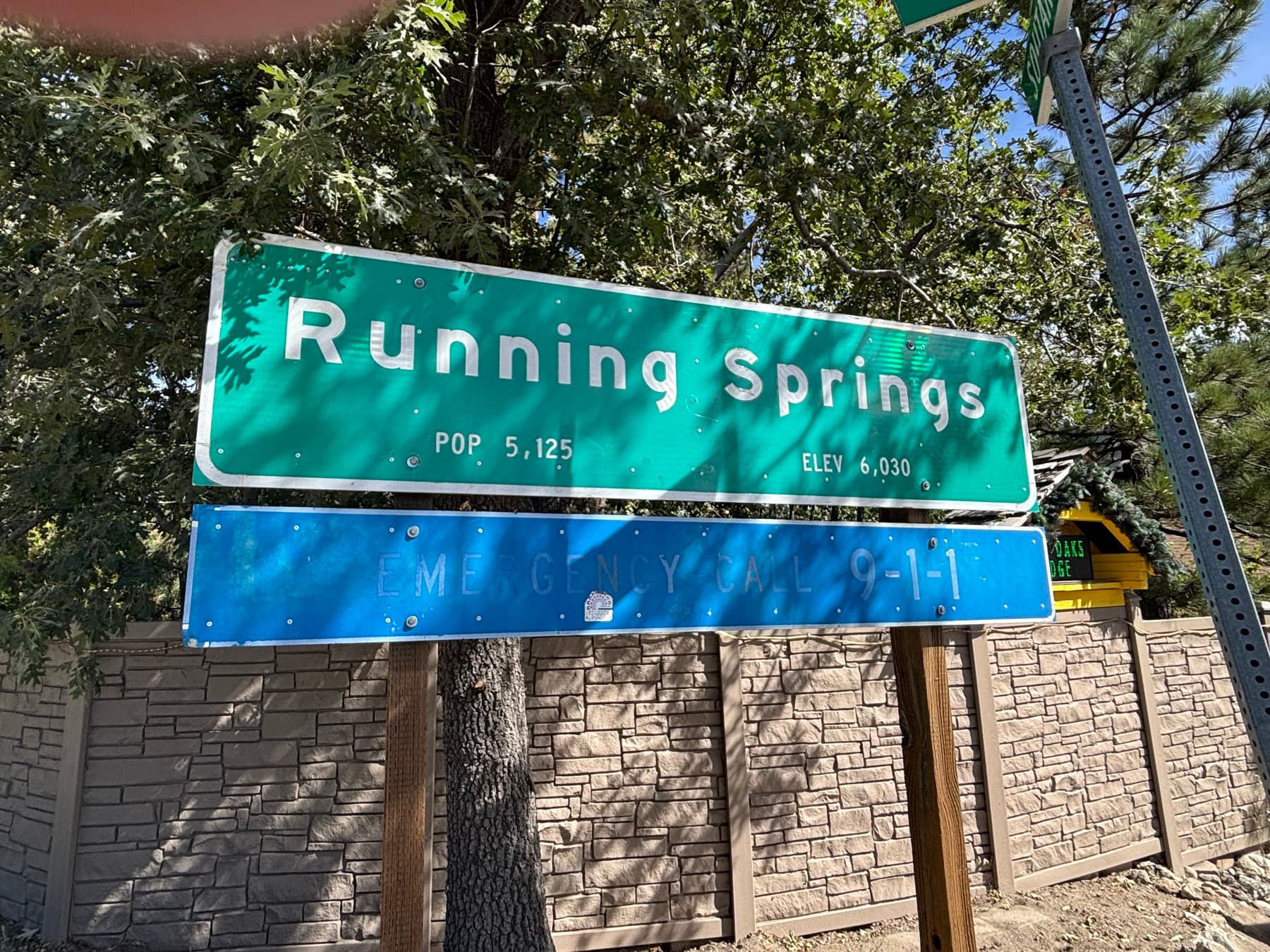
Running Springs is an unincorporated mountain community in San Bernardino County, in the San Bernardino Mountains of Southern California. ZIP code 92382. Published elevation is often given around 6,109 feet; the welcome sign photographed for this site lists 6,030 feet. Treat those as approximate, not a promise for every lot.
On the map it sits between the Lake Arrowhead side of the Rim and recreation farther east toward Big Bear. State Route 18 (the Rim of the World Highway) runs through this corridor. State Route 330 comes up from the San Bernardino / Highland side and meets SR-18 in Running Springs. That interchange is why people describe the town as a hinge between everyday mountain life and winter recreation farther up 18.
Nearby names you will hear in the same search: Arrowbear Lake, Green Valley Lake, Skyforest, and Crestline. They are not interchangeable. Drive them.
What Is It Like Living in Running Springs, California?
Living in Running Springs feels like everyday life in a forested Southern California mountain town: trees, changing seasons, outdoor recreation, and a smaller-community pace — plus work, shopping, and taking care of a house. You can get groceries, fuel, mail, and hardware in town, then drive a short way to Lake Arrowhead or Blue Jay for a larger market, a pharmacy, or a hospital. Snow is part of the year, and residents plan for it the way other towns plan for heat.
Cyndi’s description, from her Running Springs interview: it feels like a real mountain community rather than just a place people come to visit. Trees, snow, changing seasons, and outdoor recreation — plus going to work, taking care of a house, shopping, and dealing with weather. She likes the smaller mountain-town feeling while still sitting between the Arrowhead area and recreation toward Big Bear.
Her mom’s line: Running Springs has always had its own personality. Living in the mountains becomes normal life instead of something you only experience on vacation.
Full-time residents, second-home owners, and weekend visitors share the same roads and weather. What you love in a three-day stay — quiet, trees, a deck — is also what you care for. Cyndi will not tell you the town is “for” a certain type of person. She looks at lifestyle: smaller community, outdoor access, and whether you want to come home to a quieter town after a day toward Big Bear.
What she personally likes, in her words: it still feels like a mountain town. You can be surrounded by trees and close to recreation without feeling like everything around you exists for tourists. “It’s not trying to be Orange County in the mountains.”
Why People Love Living in Running Springs
People fall for Running Springs because it still feels like a mountain town: forest surroundings, decks and views, four-season weather, and outdoor recreation — without trying to be a large resort or a copy of a coastal suburb. You can hike, ski nearby, or sit on a deck in the trees, then remain connected to Southern California cities down the hill. The town is small enough to feel personal and close enough to Lake Arrowhead, Snow Valley, and Big Bear that a weekend can go in more than one direction.
Cyndi likes that you can be surrounded by trees and close to recreation without feeling like everything around you exists for tourists. Her mom’s version of the same idea: you do not need a lake outside the window to feel like you are living in the mountains. Neighborhoods are wooded and often quieter than a destination village. Wildlife, trails, and the San Bernardino National Forest are part of the setting, not a backdrop you only see on vacation.
Summer here is the version of mountain living most listing photos show: warm days, forest shade, and time on the deck. Winter is part of the appeal too — snow on the trees, four-season living, and Snow Valley a drive up State Route 18. Full-time households and second-home owners share that rhythm. The town works as a primary home when the week fits, and as a getaway when you want mountain air without leaving Southern California.
If you want a local REALTOR® who already works on Hilltop Blvd and treats driveway, parking, and winter access as part of the conversation, start with Cyndi’s background and Running Springs homes for sale.
Is Running Springs a Good Place to Live?
Yes — for people who want forest surroundings, four-season mountain living, outdoor recreation, and a smaller town that still sits in Southern California. Cyndi describes it as a real mountain community rather than a place people only visit. It is a strong fit when you like that quieter rhythm and are willing to prepare for winter weather, driveway access, and mountain-home upkeep the same way residents already do.
It is a weaker fit if you need city density, a 24-hour supermarket on the next block, or a winter you never have to think about. That is a lifestyle match, not a verdict on the town. Spend time here on an ordinary weekday and in a season that is not only summer before you decide.
Why Do People Move to Running Springs?
People move here for mountain scenery, forest privacy, outdoor recreation, and a smaller-community atmosphere — often after years of denser Southern California living. Some buy a full-time home. Others keep a second home or weekend cabin and still work or visit family down the hill. Location helps: Snow Valley is nearby, Lake Arrowhead and Big Bear are day-trip close, and the town is not trying to be Orange County in the pines.
Cyndi looks at lifestyle rather than a type of buyer: smaller community, outdoor access, and whether you want to come home to a quieter town after a day toward Big Bear. If you are relocating from Orange County, compare the week you will actually live — not only the listing photos. The Orange County buyers page covers that transition in more detail.
What Are the Benefits of Living in Running Springs?
The main benefits are scenic forest living, four-season weather, outdoor recreation, privacy on wooded lots, a smaller-town feel, and access to Snow Valley, Lake Arrowhead, and Big Bear while remaining in Southern California. Mountain homes — cabins, A-frames, decks, and hillside houses — are part of that character. Everyday errands can be done in town; larger shopping and hospital care are a short drive away.
Pros and Cons of Living in Running Springs, California
Running Springs offers a scenic Southern California mountain lifestyle: forest surroundings, four-season weather, outdoor recreation, a smaller-community atmosphere, and convenient access to Snow Valley, Lake Arrowhead, and Big Bear. Cabins, decks, and wooded lots are a big part of the appeal. Mountain living also asks for preparation — winter weather, driveway access, property care, wildfire awareness, and insurance — so buyers can enjoy the lifestyle with eyes open.
Pros of Living in Running Springs
The advantages are the reason most people start looking here in the first place. Running Springs is a forested mountain community with real seasons, outdoor access, and a quieter daily pace than much of Southern California — without leaving the region.
- Forest surroundings and mountain scenery. Pines, hillside streets, and the San Bernardino National Forest are the setting, not a weekend backdrop. Privacy and tree cover are common reasons people choose a lot here.
- Outdoor recreation. Hiking, mountain biking, forest trails, and seasonal snow sports are close. Snow Valley is a drive east on State Route 18. Nearby lakes and towns expand a weekend without requiring a long trip out of the mountains.
- Four-season living. Summer days on a deck, fall prep, winter snow, and spring melt are part of the year. For many buyers that seasonal change is the point of moving to the mountains.
- Smaller-community atmosphere. Cyndi likes that it still feels like a mountain town. Her mom’s line: living in the mountains becomes normal life, not only a vacation. The town is not trying to be Orange County in the mountains.
- Mountain homes and cabins. Inventory includes older cabins, traditional mountain houses, A-frames, multi-level homes on slopes, and updated properties. Decks, fireplaces, and views are property-specific — and they are a large part of why people buy.
- Space and a getaway from denser cities. Many lots feel more wooded and private than a typical suburban street. Some buyers use a Running Springs home as a full-time residence; others keep it as a second home or weekend place while remaining connected to Southern California.
- A useful location on the Rim. You can spend a day toward Lake Arrowhead, Skyforest, or Big Bear and come home to a smaller town. Snow Valley uses a Running Springs mailing address and sits on the same highway corridor.
Mountain Living Considerations in Running Springs
Searches for the “cons of living in Running Springs” usually point to mountain-living realities: snow, winter driving, steep driveways, wildfire awareness, insurance, trees, and distance from some city-scale services. Those are planning topics, not reasons the town is unwelcoming. Residents prepare for them, and buyers should evaluate them on the specific property — so the lifestyle stays enjoyable.
What Are the Main Mountain-Living Considerations?
The main considerations are winter weather and driving, driveway access and snow removal, wildfire preparedness and insurance, trees and property maintenance, power interruptions, internet and utilities that vary by address, and a short drive for some larger services. Residents prepare for these as part of enjoying four-season forest living. Evaluate them on the specific property rather than as a verdict on the town.
Snow, winter weather, and four-season living
Snow is part of the appeal of four-season mountain living, but buyers should understand winter road conditions, driveway access, snow removal, and chain requirements before choosing a property. Elevation, sun, and the lot change how a winter actually feels. A house that is easy in August can ask more of you in a storm. Residents typically keep supplies, traction devices, and a clearing plan ready before the first real weather — Cyndi’s mom’s advice: you don’t wait for snow to start falling.
Winter driving, chains, and mountain roads
State Routes 18 and 330 are winding mountain highways. Weather, ice, rockfall, collisions, and posted chain controls can slow or close segments. That is why locals check Caltrans QuickMap or 1-800-427-ROAD before leaving in a storm, and why they allow extra time. Four-wheel drive can help; it does not erase ice or replace proper tires and following posted chain controls. Learn chain rules before you are halfway up. Holiday and ski weekends can add traffic on the same two-lane corridors.
Driveways, parking, and snow removal
Cyndi treats the driveway as part of the property: how steep is it, can you turn around, how many cars, and how will you carry groceries in snow. Clearing is usually the owner’s job — shovel, blower, or a hired service. Snow has to go somewhere on the lot; plows can leave a berm across the entrance. Residents should not put snow back in the roadway. A steep driveway is not automatically a no — buy the winter driveway, not only the summer one. Useful parking for two vehicles, guests, or gear can be hard to add later on a sloped lot.
Wildfire preparedness and homeowners insurance
Forest living includes wildfire awareness. Cyndi’s point is to understand the individual property — vegetation, trees, access, roof and exterior, insurance, and maintenance — so you can enjoy living in the forest with a plan. Her mom: fire awareness becomes part of normal life; the work you do beforehand matters. Defensible space, gutters, and tree work are ongoing. Start insurance early with a licensed professional and the actual address. Mountain coverage can differ from a coastal policy. A lender can require acceptable insurance before closing. See mountain home insurance. This is not insurance or legal advice.
Power, trees, and mountain property maintenance
Storms can interrupt power. Heat, pipes, and a generator plan are property-specific. Generators belong outdoors, never in a garage or living space, because of carbon monoxide. Supplies, shutoffs, and snow on the deck or roof are on winter and storm prep. Roofs, gutters, decks, drainage, and trees work harder in the forest. That is the living system you bought, not a reason to avoid the mountains. Hardware in town helps for small jobs; larger tree work and roofing are specialist trades. Cyndi is not the inspector.
Internet, utilities, and distance from some services
Internet and utilities vary by address. Confirm service at the exact house if you work from home. Water and sewer versus well or septic is also property-specific. Everyday errands can be done in town; a larger grocery, pharmacy, and the hospital are in the Lake Arrowhead / Blue Jay area. That mix is normal mountain-town life. If you have a medical condition that needs frequent specialists down the hill, measure that drive in winter, not only in June.
The later sections on weather, roads, buying, and moving add property-level detail. Treat this list as what to prepare for — then go see whether the forest, the seasons, and the town still feel like home.
Running Springs Community Map
This community overview shows everyday Running Springs: grocery, fuel, the post office, water district, hardware, auto parts, the highway junction, and the downtown bus stop. Larger grocery stores and extra fuel in Blue Jay and Lake Arrowhead are marked in dark green because they sit outside town — and because many full-time households use them. Cranberry markers are in Running Springs.
How to Use the Running Springs Maps
Pinch or use the +/− controls to zoom. Drag to move around town. Tap a numbered marker for the name, address, and a short note. Open OpenStreetMap from a marker or directory card when you want directions. Cranberry markers are in Running Springs. Dark green markers are nearby resources outside town. The same number appears on the map, in the list under each map, and in the directory at the bottom of this page.
- 1Running Springs Fine Foods31987 Hilltop Blvd
- 276 fuel station32124 Hilltop Blvd
- 3United States Post Office — Running Springs2641 Palo Alto Way
- 4Running Springs Water District office31242 Hilltop Blvd
- 7Saw Hilltop Automotive / NAPA Auto Parts32005 Hilltop Blvd
- 8Rusty Hammer Hardware31930 Hilltop Blvd
- 9Mountain Top Producers Realty — Cyndi’s office31984 Hilltop Blvd
- 20SR-18 / SR-330 junctionRim of the World Hwy at SR-330
- 21Mountain Transit — downtown Running Springs stopPalo Alto Way & Commercial Way
- 34Stater Bros. Markets · outside town28100 Lakes Edge Rd
- 35Jensen’s Finest Foods · outside town27264 CA-189
- 4576 fuel station (Blue Jay) · outside town27243 CA-189
- 49986 Pharmacy (Mountains Community Hospital campus) · outside town29099 Hospital Rd
Running Springs real estate
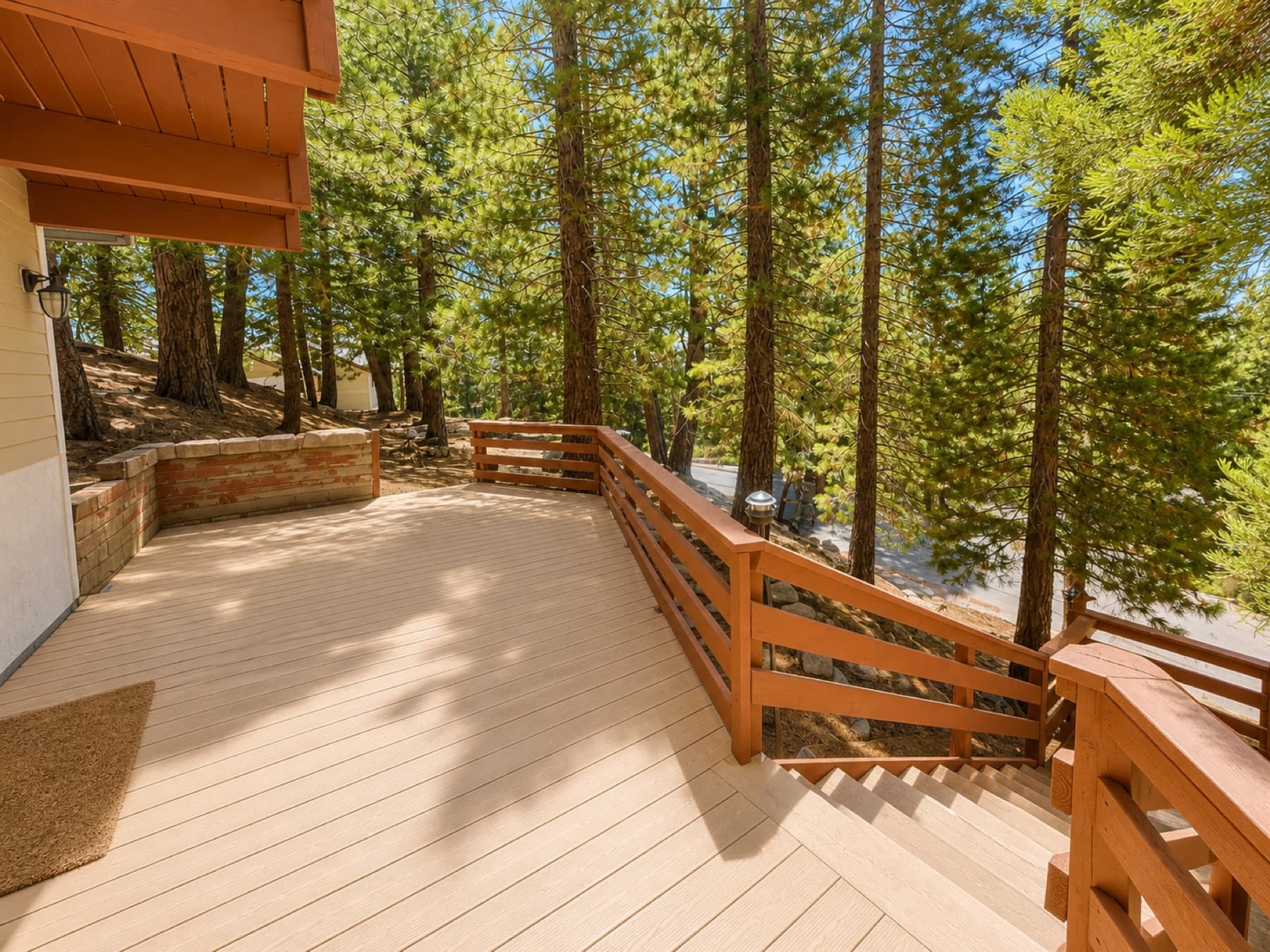
Running Springs real estate is a mix of mountain homes and cabins: older cabins, traditional houses, A-frames, multi-level homes built into slopes, updated properties, rustic interiors, and houses that have been modernized. Two homes on the same street can have completely different personalities. Current inventory lives on the Running Springs homes for sale page.
Buyers from flatter Southern California often shop kitchens first. Up here the lot does more of the living: garage versus street parking, a driveway you can actually use, level entry versus stairs, sun versus shade, where snow will pile, and whether a deck is a favorite room. Views are property-specific. Forested lots are beautiful, and they come with tree work and defensible-space responsibility — part of owning in the woods.
There is no permanent “cheap town” label. Prices and inventory change. Compare current listings and recent sales — not a slogan about what a ZIP code “gets you.”
Homes for sale in Running Springs
This site does not run a live countywide IDX search. Current homes Cyndi is featuring, plus her Running Springs real-estate overview, live on the Running Springs homes for sale page. The full featured list is also on featured mountain listings. If the right house is not there, tell her the community, budget, and how you will use the home.
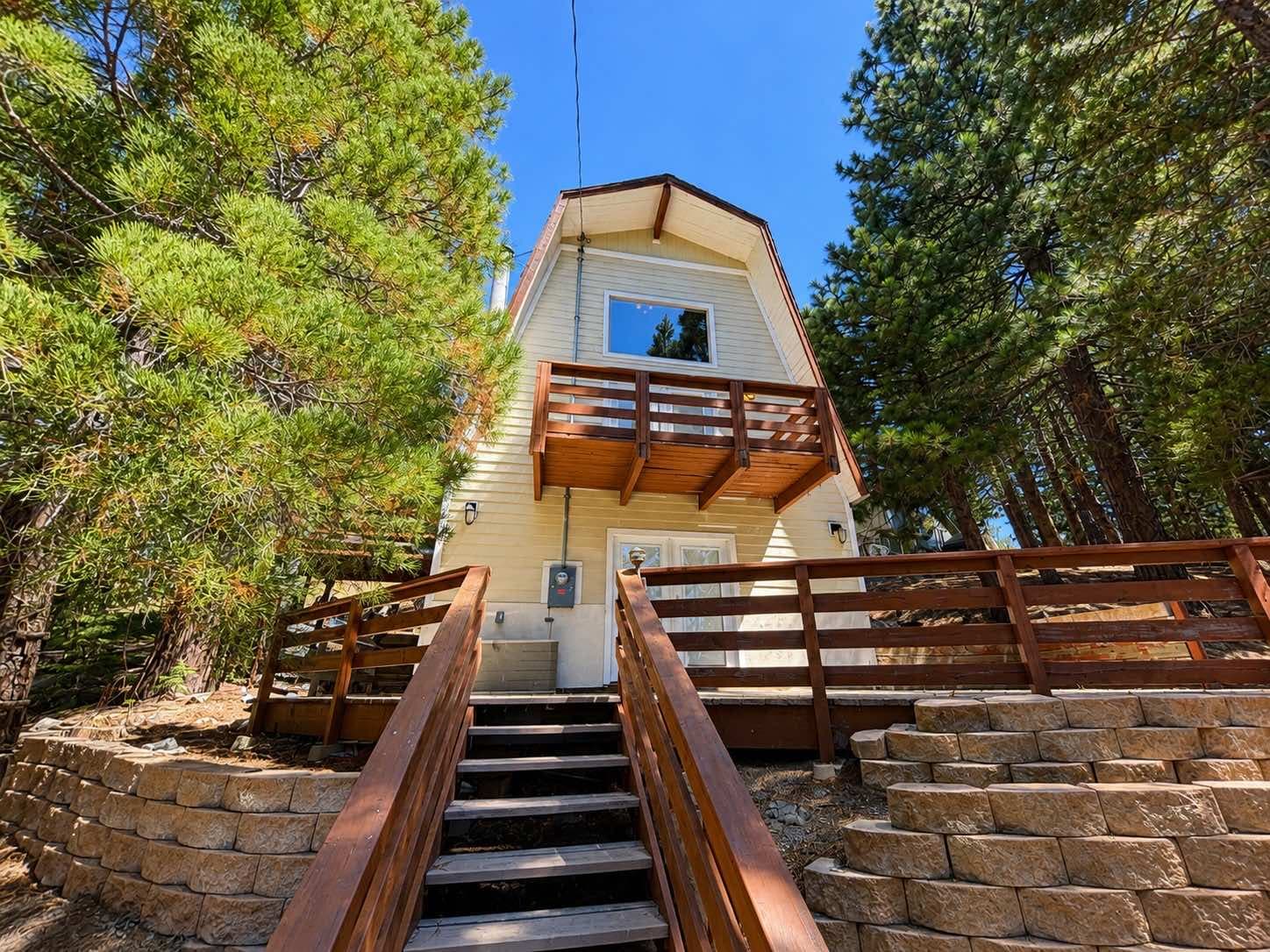 Active
$364,900
30975 Nob Hill Circle
Running Springs, CA 92382
- Beds
- 2
- Baths
- 1.5
- Sq Ft
- 1,280
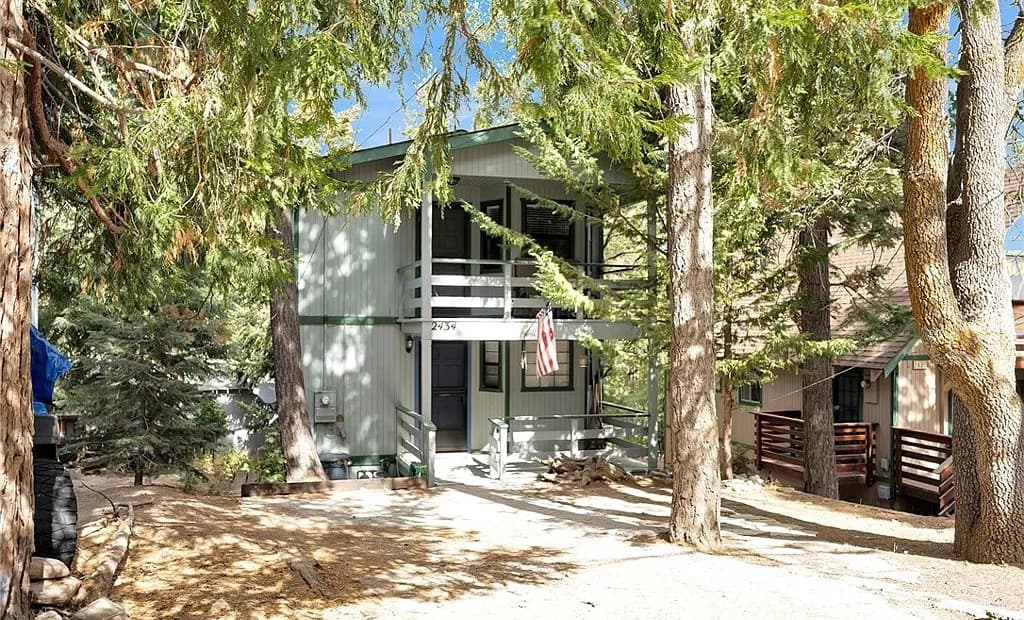 Active
$329,000
2434 Fir Drive
Running Springs, CA 92382
- Beds
- 2
- Baths
- 1.5
- Sq Ft
- 1,202
Emergency numbers versus office numbers
Running Springs has local fire stations, a clinic in town, and sheriff coverage from the Twin Peaks station. Call 911 for fire, medical emergencies, and crimes in progress. Station phones and the sheriff non-emergency line are for questions that are not emergencies. Knowing which number to use is part of settling in — not a sign the town is remote.
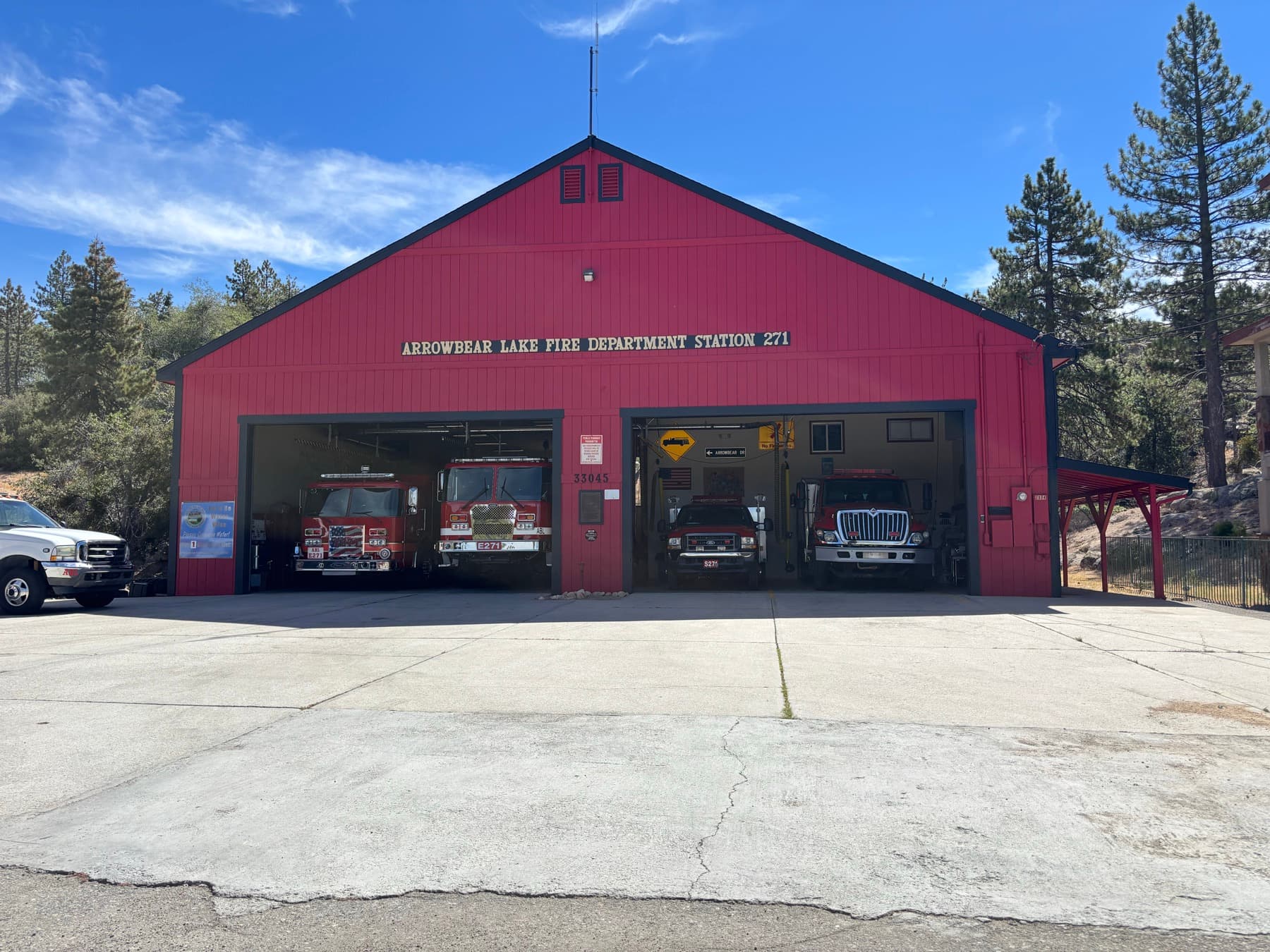
There is a clinic in town. It is not a 24-hour emergency room. The hospital and ER are in Lake Arrowhead. Law enforcement is the San Bernardino County Sheriff, dispatched from the Twin Peaks station — a non-emergency line exists; it is not 911. Running Springs fire stations are on Hilltop Blvd and on Hunsaker Way. Arrowbear’s station is just east of town.
After-hours water or sewer leaks go to the Running Springs Water District emergency number, not to 911, unless someone is injured.
Emergency Services Near Running Springs
This map shows fire, clinic, water-district, hospital, and sheriff resources relative to town — including which ones require a short drive. Dark green markers are outside Running Springs. Save 911, the sheriff non-emergency line, and the water district after-hours number in your phone before the first storm.
- 4Running Springs Water District office31242 Hilltop Blvd
- 5Running Springs Fire Station 51 (headquarters)31250 Hilltop Blvd
- 6Running Springs Fire Station 5032151 Hunsaker Way
- 13Running Springs Rural Health Clinic2642 Palo Alto Way
- 26Arrowbear Lake Fire Station 271 · outside town33045 Rim of the World Hwy
- 27Mountains Community Hospital & Emergency Room · outside town29101 Hospital Rd
- 28San Bernardino County Sheriff — Twin Peaks Station · outside town26010 Highway 189
- 38San Bernardino County Fire Station 91 · outside town301 S Highway 173
- 39Lake Arrowhead Rural Health Clinic · outside town29099 Hospital Rd, Ste. 200
- 46Running Springs Water District — collection system building2536 Hunsaker Dr
- 47San Bernardino County Fire Station 26 · outside town737 Grandview Rd
- 48San Bernardino County Fire Station 92 · outside town981 Highway 173
- 49986 Pharmacy (Mountains Community Hospital campus) · outside town29099 Hospital Rd
- 50Lake Arrowhead Dental Clinic (MCH) · outside town29099 Hospital Rd, Ste. 112
Fire, forest, and insurance considerations
Forest living in Running Springs includes wildfire awareness and a practical insurance conversation for the actual address. The point is to prepare the property — vegetation, access, roof and exterior, and maintenance — so you can enjoy living in the trees. Cyndi treats this as due diligence, not a reason to write the mountains off. Her mom: fire awareness becomes part of normal life; the work you do beforehand matters.
Defensible space is the maintained area around a home intended to reduce combustible material. California requirements in applicable areas change — check current official guidance, not a rule you heard years ago. Pine needles return. Gutters fill. Branches grow over roofs.
Insurance: start early with a licensed professional and the actual address. Mountain coverage can differ from a coastal or suburban policy. A neighbor’s premium does not prove yours. The California FAIR Plan can be a last-resort option for basic coverage; it is not automatically a full homeowners policy. A lender can require acceptable insurance before closing. The buyer-facing insurance guide is mountain home insurance. This is not insurance or legal advice.
Evacuation: know two ways out of your street if they exist, keep a go-bag that is not trapped in a snowed-in garage, and sign up for official county emergency alerts. Do not treat a social-media post as an evacuation order. In a fire, follow law enforcement and fire personnel even if the route is not the one you like. The mountain-wide guide for the property and for leaving is getting your mountain home wildfire-ready.
Food, coffee, and local shopping
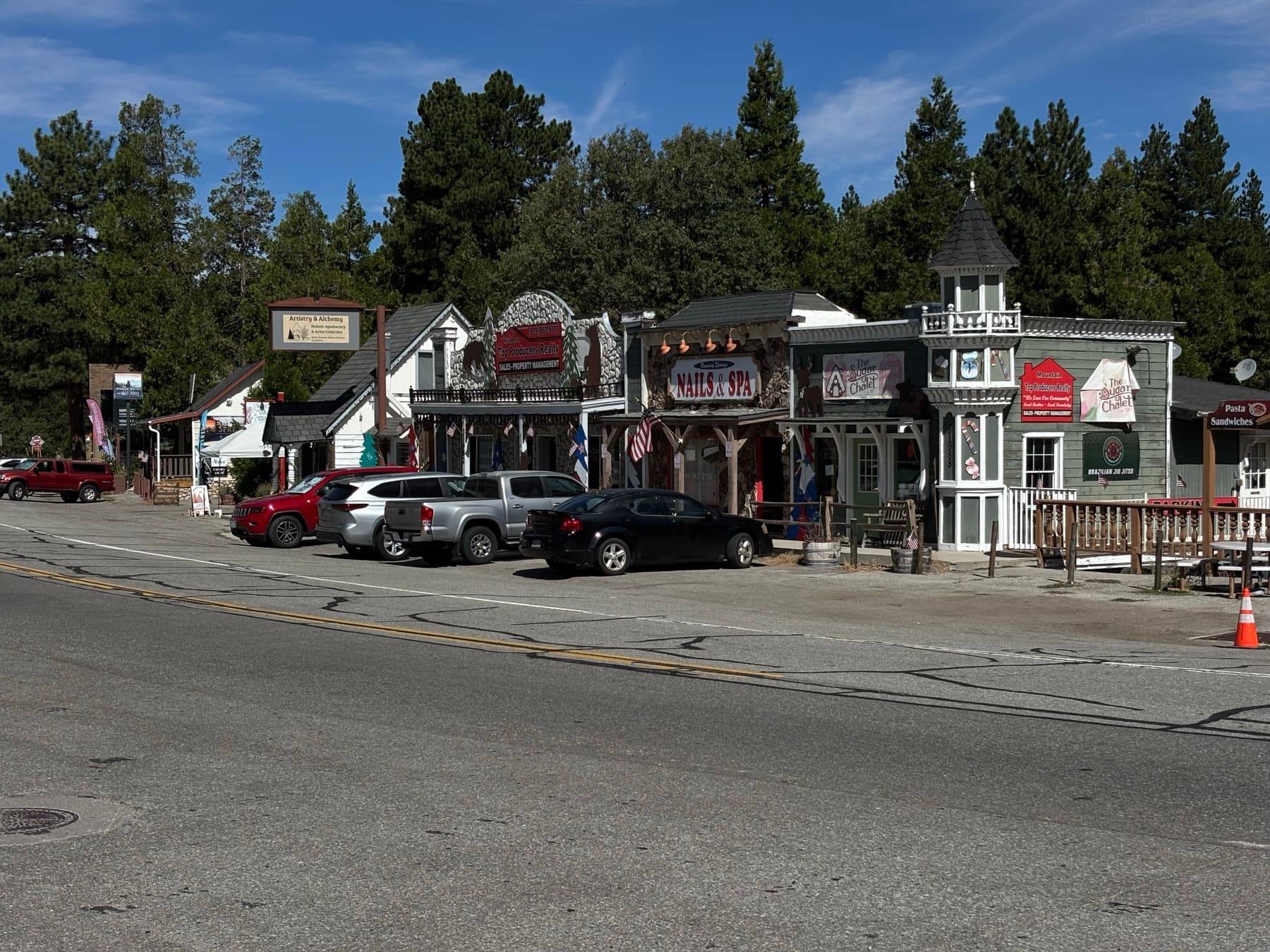
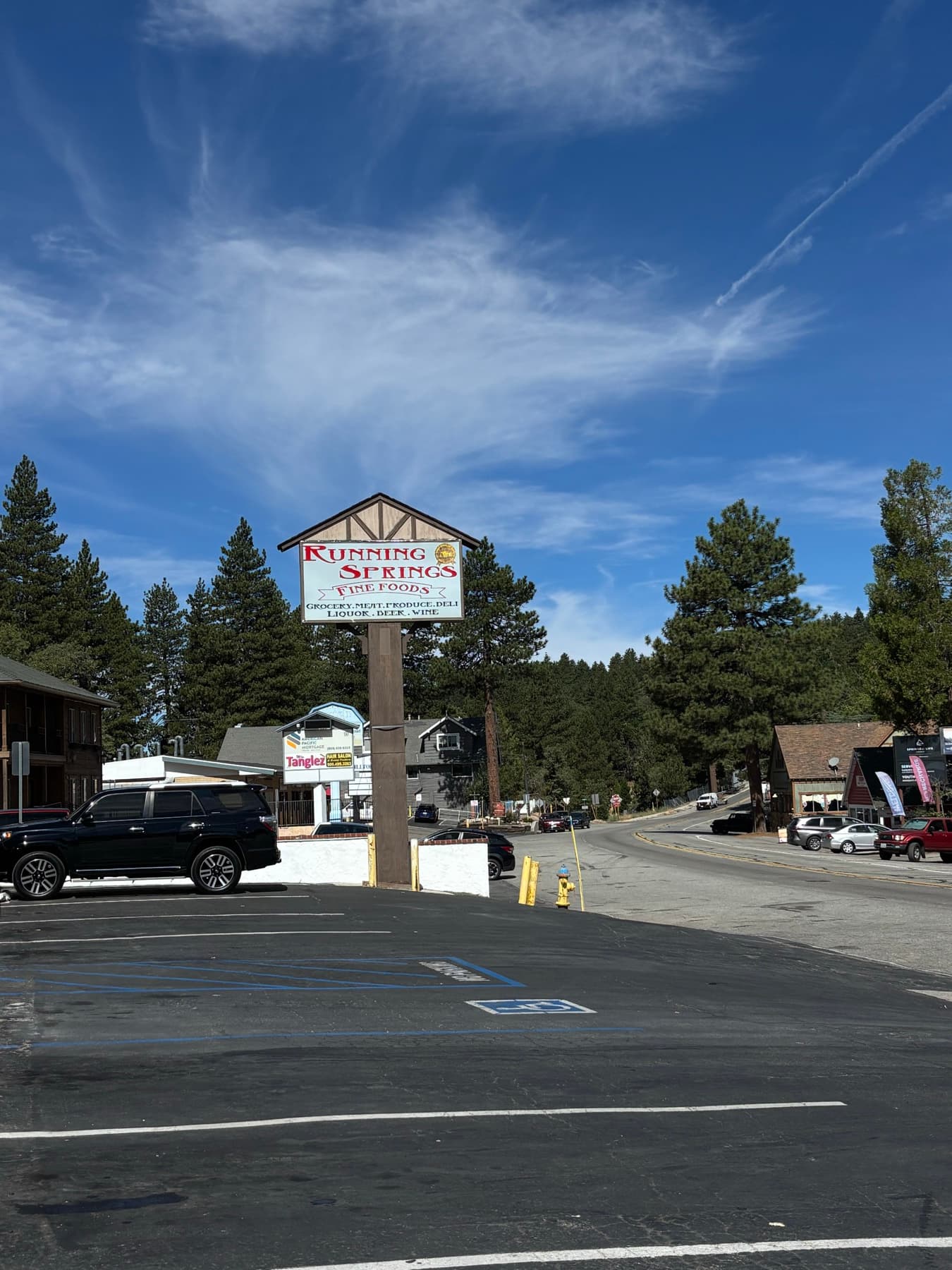
Breakfast and coffee in town include Old Country Coffee Shop and LuluBelle’s. Pizza and Chinese food are on Hilltop. Hardware is at Rusty Hammer. Ski and board gear is at Blauer. This is not a ranked restaurant list.
If you are spending a day seeing whether the town fits, you can eat in Running Springs, then continue to Arrowbear for Neo’s Deep Creek Drive-In or west to Skyforest for Bella’s Antiques and Lake Arrowhead Village.
Food and Local Shopping Near Running Springs
This map is a walking or driving loop of in-town grocery, coffee, restaurants, and shops, plus nearby Arrowbear, Skyforest, Blue Jay, and Lake Arrowhead stops when you want more choices. Dark green means you have left Running Springs.
- 1Running Springs Fine Foods31987 Hilltop Blvd
- 8Rusty Hammer Hardware31930 Hilltop Blvd
- 10Old Country Coffee Shop32019 Holiday Ln
- 11LuluBelle’s Coffee House and Bakery31621 Pleasant Dr
- 12Hilltop Chinese Restaurant31956 Hilltop Blvd
- 23Blauer Ski & Board32170 Hilltop Blvd
- 24Neo’s Pizza House32000 Hilltop Blvd
- 32Bella’s Antiques · outside town935 Kuffel Canyon Rd
- 34Stater Bros. Markets · outside town28100 Lakes Edge Rd
- 35Jensen’s Finest Foods · outside town27264 CA-189
- 40Lake Arrowhead Village · outside townLake Arrowhead Village
- 41Neo’s Deep Creek Drive-In · outside town32890 Hilltop Blvd
Running Springs weather throughout the year
Running Springs has four real seasons: snowy winters, a muddy and beautiful spring, warm forest summers, and a practical fall for getting the house ready. Do not treat a summer showing as the whole climate. Exact temperatures and snowfall totals change year to year and lot to lot — this page will not invent them.
Winter
Snow and ice are possible. Roads, driveways, and walkways need a plan. Chain controls can appear on mountain highways when Caltrans posts them. Heat, pipes, and access matter more than they do at lower elevation.
Spring
Melt, mud, drainage, and leftover snow in shaded spots. A good time to see how water moves on the lot — and to catch deck and roof issues before summer guests arrive.
Summer
Warm days, forest recreation, and the version of the house most listing photos show. Still look at shade, parking, and how you will live here in other seasons. Dry vegetation is also when wildfire awareness is part of normal mountain life.
Fall
A practical prep season: gutters, needles, heat systems, and supplies before the first real storm. Weekend traffic can still pick up around holidays and ski season.
Winter living in Running Springs
Winter is part of why people love four-season mountain living here: snow on the trees, a quieter town, and recreation toward Snow Valley. It also rewards a little planning — driveway, parking, heat, and how you will get in and out of the lot. Cyndi still looks at those details when she shows a house in beautiful weather. Her mom: you don’t wait for snow to start falling before thinking about your shovel, supplies, or what the house needs. For mountain-wide driveway and parking questions, use mountain driveways and parking. For Caltrans QuickMap and 1-800-427-ROAD, use winter access in the San Bernardino Mountains. This section stays about living in Running Springs.
Does Running Springs Get Snow?
Yes. Snow is part of winter in Running Springs. How much you see on a given street depends on elevation, sun, and the lot — Cyndi does not publish a single snowfall number for the whole mountain. A house that is easy in August can feel different in a storm. Check current weather and road conditions before you travel.
What Is Winter Like in Running Springs?
Winter can mean snow, ice, chain controls on the highways, and a house that needs heat and a clearing plan. It can also mean the scenery people move here for. Residents typically keep traction devices that fit their tires, know who plows the street that serves the house, and have a plan for the driveway. Public roads, state highways, and private roads are not maintained the same way.
Clearing the driveway is usually the owner’s job — shovel, blower, or a hired service. If you live in Orange County when a storm hits, who clears it before you drive up? Snow has to go somewhere; storage space on the lot is a real feature. Plows can leave a berm across the driveway entrance. Residents should not put snow back in the roadway.
How Difficult Is Winter Driving in Running Springs?
Winter driving is a skill residents learn, not a reason to write the town off. Mountain highways can have ice, chain controls, and slower traffic after a storm. Locals check Caltrans, carry traction devices that fit their tires, and give themselves extra time. Side streets and steep driveways vary house to house — that is why Cyndi still looks at access on a sunny showing day.
Do You Need Four-Wheel Drive in Running Springs?
Four-wheel drive is helpful for many Running Springs streets, especially after a storm. It does not erase ice, and it does not replace proper tires or following posted chain controls. Learn chain rules before you are halfway up. The better question is whether you can reach that specific driveway, park, and get groceries in safely — in the vehicle you will actually own.
Heat, vacant-house plumbing, and power interruptions are property-specific. Generators belong outdoors, never in a garage or living space, because of carbon monoxide. Cyndi will not hand every owner the same winterizing checklist; learn that house from a qualified professional.
Roads and getting to Running Springs
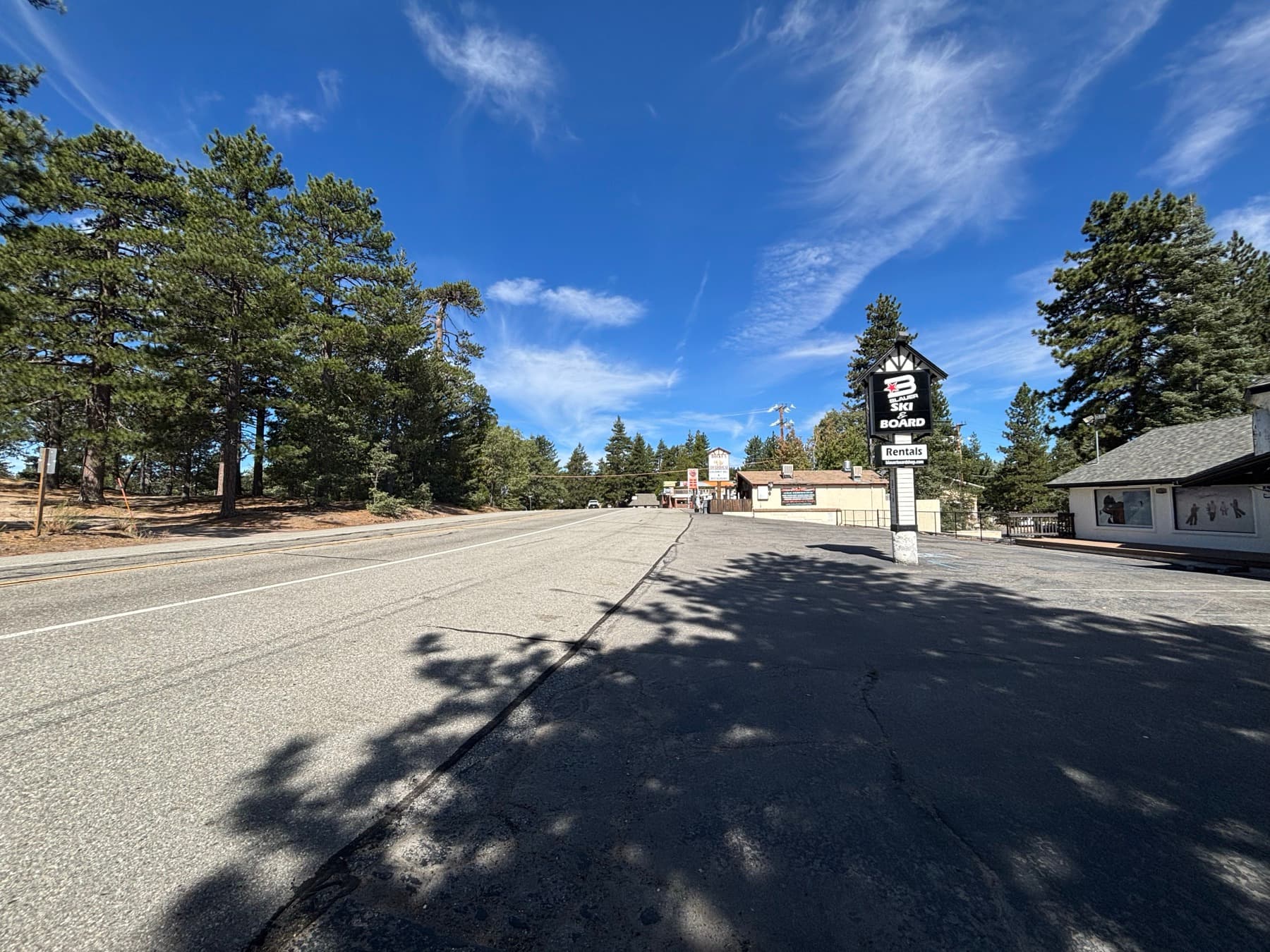
Typical published routes: SR-330 from the valley to the SR-18 junction in Running Springs; SR-18 (Rim of the World Highway) east–west along the crest toward Arrowhead communities one way and Snow Valley / Big Bear the other. These are winding mountain highways with elevation change. Weather, ice, rockfall, collisions, and chain controls can slow or close segments — which is why locals check current conditions and allow extra time. Do not treat a mapping-app estimate as a guarantee.
Holiday and ski weekends can stack traffic on the same two-lane corridors everyone else is using. Current closures and chain requirements: Caltrans QuickMap and 1-800-427-ROAD, not a website paragraph written months earlier.
Commuting from Running Springs
Some people commute from Running Springs; Cyndi will not promise a drive time. Weather, traffic, which route you use, and where you are going all change the trip. Drive the actual route more than once, including a day that is not convenient. Occasional trips to Los Angeles are not the same as five days a week. Orange County buyers should run that commute as a test, not a theory. Communities farther west, such as Crestline, can feel different for some trips than living farther into the mountains.
Mountain Transit Rim Route 4 connects downtown Running Springs with Lake Arrowhead-area stops, including the hospital. It is not a substitute for owning a winter-capable vehicle if you live on a steep side street.
Nearby mountain communities
Running Springs sits in a corridor of distinct mountain towns. Nearby names are worth touring because they share forest and seasons but not the same identity. Drive them instead of choosing from photographs.
- Arrowbear Lake — often in the same search as Running Springs. Look at that road and that driveway, not a label.
- Green Valley Lake — smaller and quieter; that seclusion is part of the appeal when access and winter driving also work for you.
- Lake Arrowhead — private-lake identity; lake rights are parcel-specific. Close enough to compare, not the same town.
- Blue Jay and Cedar Glen — Arrowhead-area names buyers often pair with a Running Springs search for shopping, services, or a different street feel.
- Skyforest — a smaller Arrowhead-area name buyers often miss online.
- Twin Peaks — sheriff station for this area; another Rim community to tour if you are comparing streets, not only ZIP codes.
- Crestline — Lake Gregory (county park lake, not private Arrowhead). Commute and road access can weigh differently than recreation toward ski areas. Listings still live on Crestline homes for sale.
- Big Bear — larger tourism and recreation destination. Some people go there for the day and come home to a smaller community.
Cyndi’s comparison in her own words: Arrowhead has more of the lake-community identity. Running Springs feels more like a small mountain town with forest and winter recreation nearby. Big Bear is a much larger destination. Spend time in both instead of choosing from photographs. Her mom: you do not need a lake outside the window to feel like you are living in the mountains.
How Does Running Springs Compare With Lake Arrowhead?
They are close enough that buyers often consider both, but they do not feel the same. Lake Arrowhead has the private lake and a stronger resort and second-home identity. Running Springs is more of a smaller mountain town connected to forest and outdoor recreation. Cyndi wants you to spend time in both instead of choosing from photographs.
How Does Running Springs Compare With Big Bear?
Big Bear is a much larger tourism and recreation destination. Running Springs is smaller and generally feels less like living inside a major resort. Some people like going toward Big Bear for skiing, restaurants, or activities, then coming home to a quieter forest town. Treat Big Bear-area skiing as a day trip with its own traffic, not as a Running Springs backyard.
Schools and community
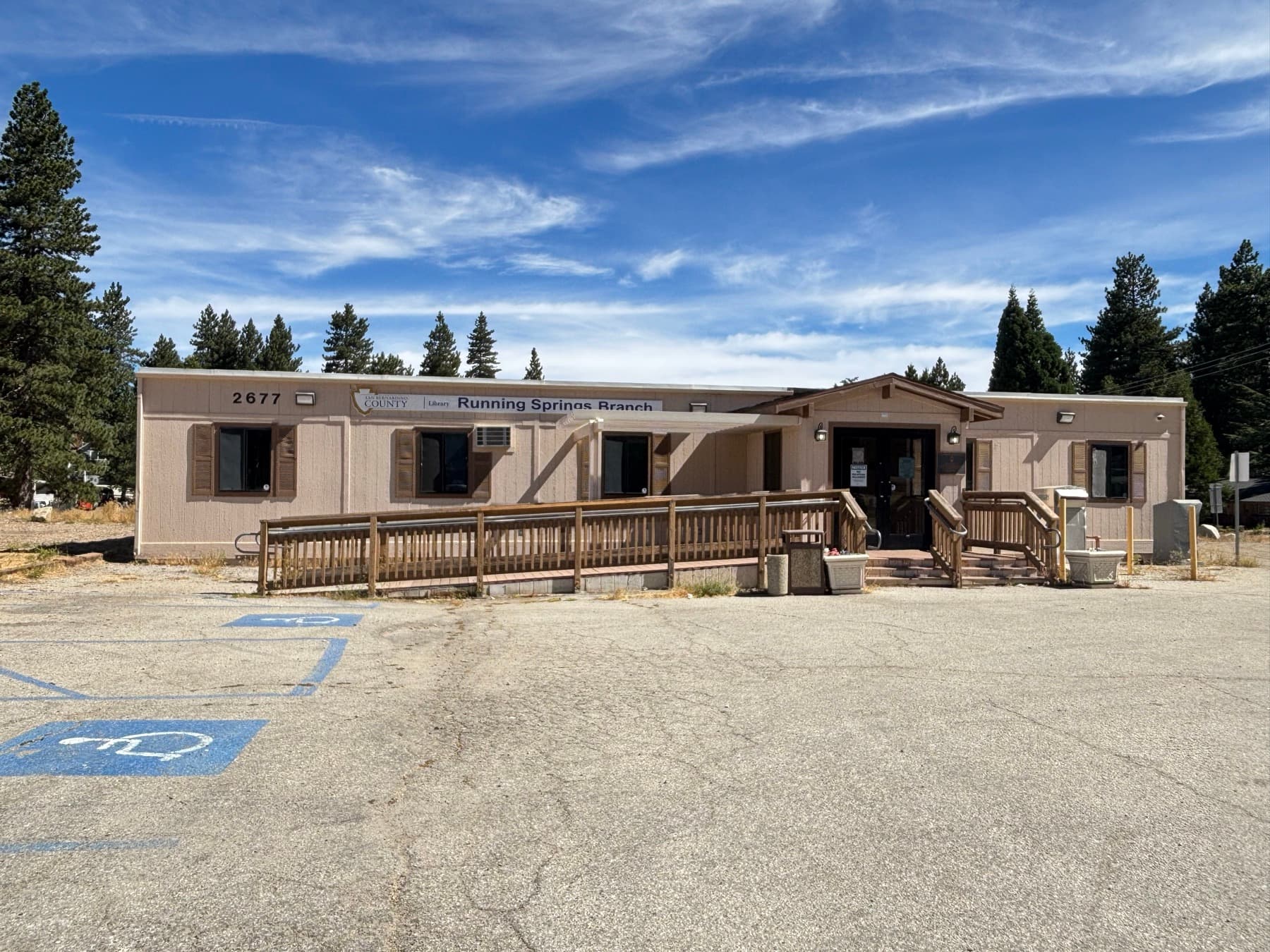
Running Springs is generally in Rim of the World Unified School District. Charles Hoffman Elementary is listed by the California Department of Education in Running Springs. Intermediate and high school campuses serving the Rim are in other mountain communities. This page does not rank schools or describe neighborhoods by who “should” live there.
Attendance boundaries, programs, and enrollment change. Verify with the district (rimsd.k12.ca.us) for the specific address you are considering. The district office is in Blue Jay.
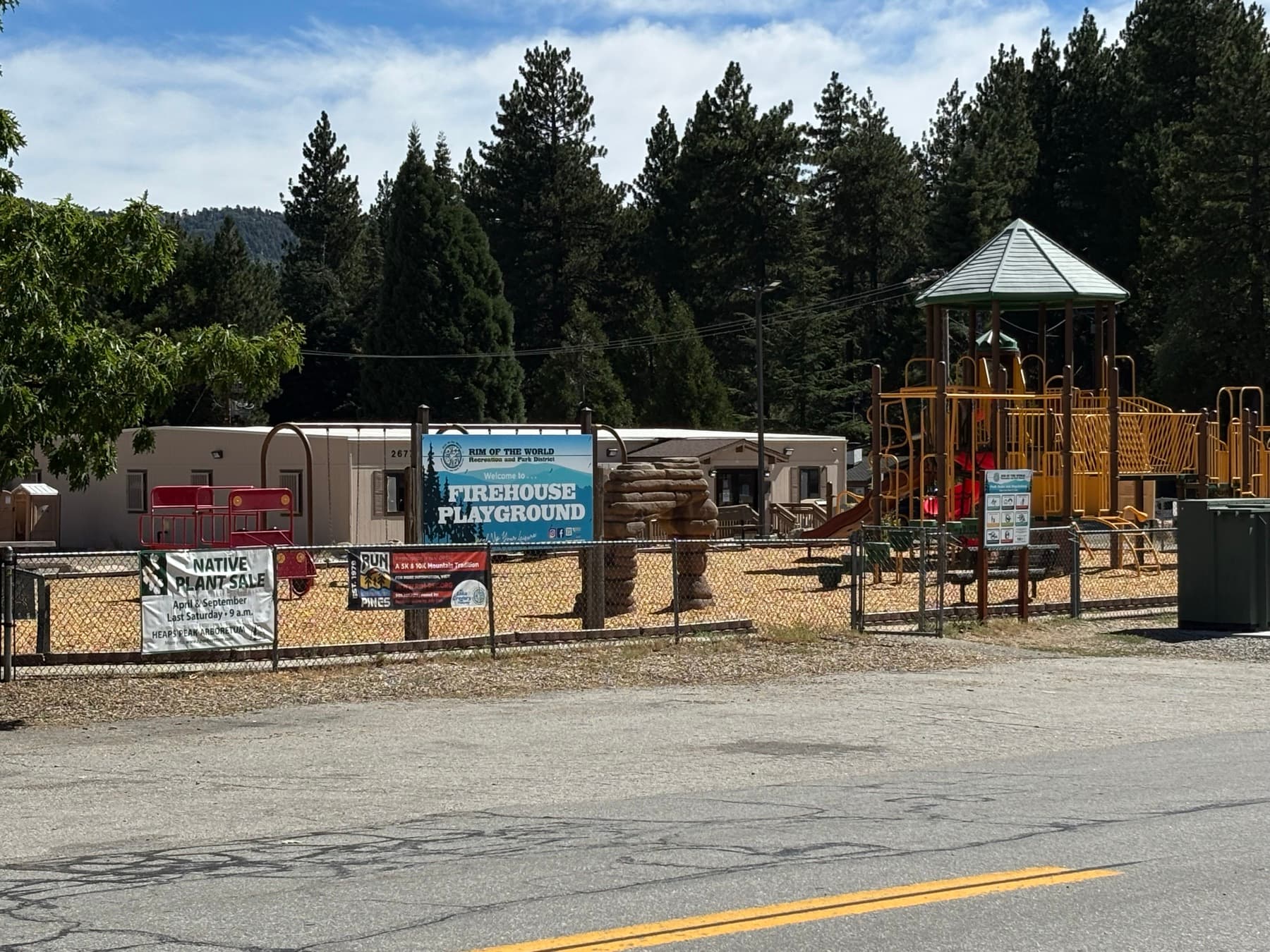
The library, Firehouse Playground, Hootman Community Center, and chamber are the civic pieces most newcomers actually use. Still tour the specific street and driveway — community amenities do not change how a particular lot lives.
Schools and Community Near Running Springs
Elementary school, library, playground, community center, and chamber in Running Springs, plus the intermediate school, high school, and district office outside town. Dark green markers are not in Running Springs. Confirm assignment by address; a campus photograph does not prove the house is in that attendance area.
- 14Charles Hoffman Elementary School2851 Running Springs School Rd
- 15Running Springs Branch Library2677 Whispering Pines Dr
- 16Firehouse Playground & picnic area2677 Whispering Pines Dr
- 17Robert Hootman Community Center2985 Running Springs School Rd
- 18Community restrooms (Commercial Way)31960 Commercial Way
- 19Running Springs Area Chamber of Commerce2929 Running Springs School Rd
- 29Rim of the World Senior High School · outside town27400 CA-18
- 30Mary P. Henck Intermediate School · outside town730 Rhine Rd
- 42Arrowbear Park / Tucker Ball Field · outside town33211 Arrowbear Dr
- 43Rim of the World Unified School District office · outside town27315 North Bay Rd
What Should You Know Before Moving to Running Springs?
Moving to Running Springs is rewarding when you understand how everyday mountain life works. The town is a strong fit for people who want forest surroundings, four seasons, and a smaller community. Plan for winter weather, driveway access, mountain-home maintenance, and a short drive for a larger market or hospital. Visit on an ordinary weekday — not only a sunny Saturday — before you decide.
Grocery shopping
You can buy food in town at Running Springs Fine Foods. Many households still make a larger run to Stater Bros. in Lake Arrowhead or Jensen’s in Blue Jay. That is a normal mountain-town rhythm many residents like. In a storm, the in-town market matters more — and shelves can thin out.
Fuel
There is fuel in Running Springs. There is also fuel in Blue Jay. Mountain prices are often higher. Do not arrive on empty in a chain-control storm.
Medical access
There is a clinic in town. The hospital and ER are in Lake Arrowhead. Pharmacy and dental sit on that hospital campus. If you have a condition that needs frequent specialists down the hill, measure that drive in winter, not only in June.
Fire, paramedic, and law enforcement
Fire and paramedic response start with 911 and the local Running Springs fire stations. Sheriff coverage is countywide from Twin Peaks. Response times are not a brochure number; they depend on weather, roads, and call volume.
Schools
Elementary in Running Springs; later grades typically elsewhere in the Rim district. Verify with the district. No school-quality claims live on this page.
Utilities, water, and sewer
Not every house uses the same systems. Many listings show public water and sewer through the Running Springs Water District; others may be well, septic, propane, or a mix. Electricity, trash, and heating equipment are address-specific. Ask, then verify in disclosures and inspections.
Internet
Internet is not uniform on this mountain. Confirm service at the exact address before you write an offer if you work from home. A neighbor’s speed test is not yours. This page will not name providers that cannot be verified lot-by-lot.
Mail and packages
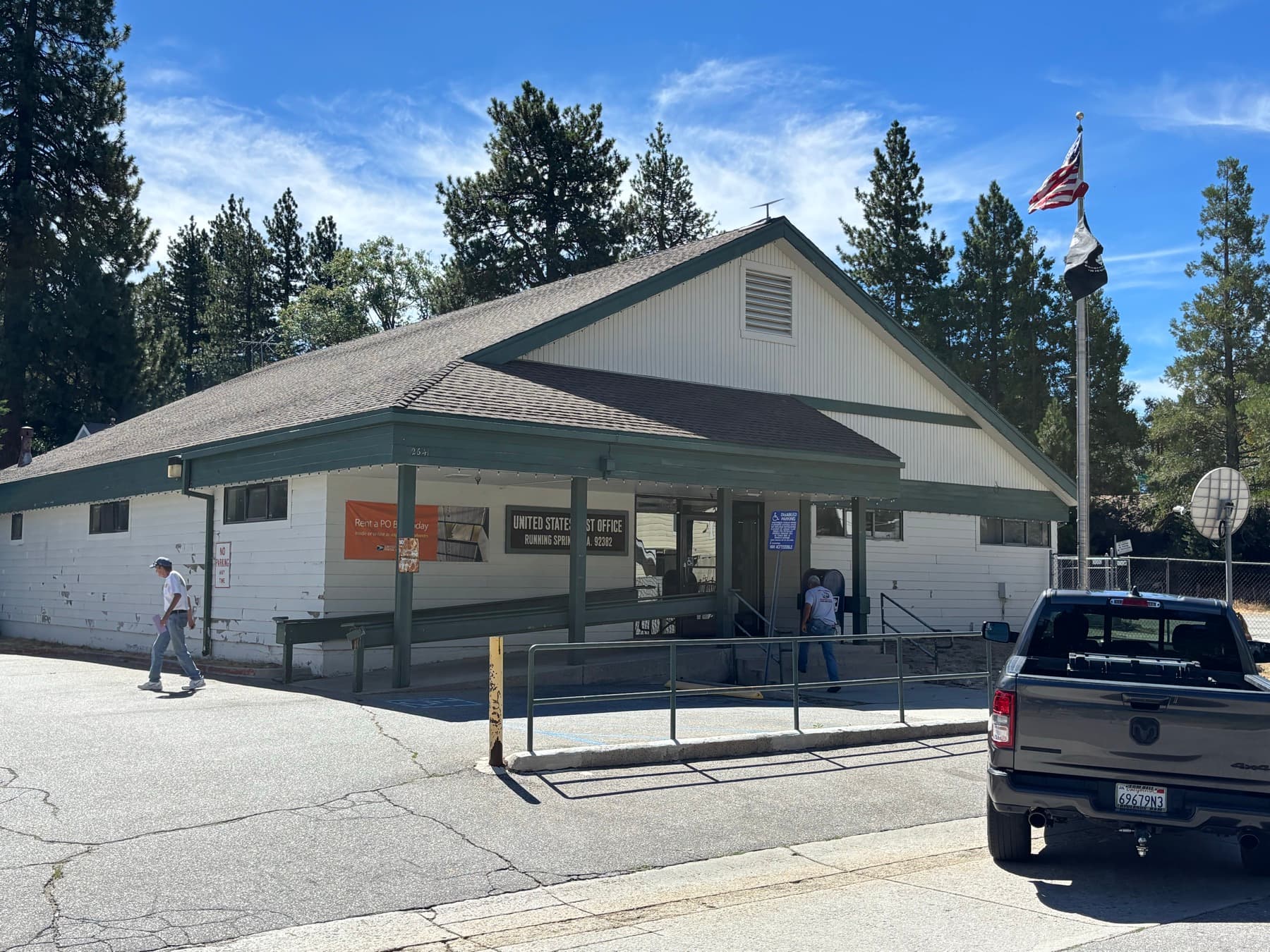
The post office is on Palo Alto Way. Steep driveways, snow, and locked gates change delivery. If you need a box, ask USPS about availability — do not assume.
Snow, winter driving, and tire chains
Own chains or cables that fit your tires before you need them. The auto-parts shop in town may have them in season; they also sell out. Caltrans, not this website, decides chain controls. Four-wheel drive helps, but ice still requires proper tires and posted chain controls.
Home maintenance and mountain property
Roofs, gutters, decks, trees, drainage, and heat work harder here. A vacant second home still needs a plan for pipes and power. Hardware in town helps for small jobs; larger tree work and roofing are specialist trades. Cyndi is not the inspector.
Insurance and emergency planning
Start insurance before you fall in love with a deck. Keep copies of important documents somewhere that is not only the mountain house. Know the water-district after-hours number and 911. Walk your evacuation options in daylight.
Recreation, restaurants, and shopping
You will not have the restaurant density of a city. You will have forest, seasonal snow recreation at Snow Valley, a playground in town, and day trips toward Arrowhead and Big Bear. If you want a quieter week and a scenic weekend, this town can be a joy. If you need city nightlife every weekend, say that out loud before you buy — you may still love visiting, but the week-to-week rhythm is different.
Buying a home in Running Springs
Buying a home in Running Springs starts with how you will use it: primary residence, second home, or weekend getaway. Then look at the lot — driveway, parking, winter access, trees, and insurance — as carefully as the kitchen. A beautiful house in the wrong location for your week is still the wrong house. Orange County buyers should compare lifestyle, not only what the same dollars buy on the coast. The buying path is buying a mountain home. One home on this site now is 30975 Nob Hill Circle. When you are ready to look at streets, contact Cyndi.
What Should You Know Before Buying a Home in Running Springs?
Decide how you will use the house first. Then look at road, driveway, parking, stairs, roof, trees, deck, drainage, heating, utilities, insurance, and winter access. A general inspection is a starting point; the property may need specialists. Cyndi is not the inspector. Her job is to help you see where questions need to be asked. For the mountain-wide showing walk-through — drainage, decks, crawl space, additions — see looking at a mountain property. For heat, septic or sewer, chimneys, and specialists, see mountain home inspections. Cyndi is not the inspector.
What Should You Look for in a Mountain Home?
Look at road and driveway slope, turnaround, parking, garage, level entry versus stairs, roof, decks, trees near structures, heating, internet at the address, water and sewer versus septic, and insurance on that parcel. Winter access is part of the showing, even in August. Cyndi watches buyers focus on the interior and skip the driveway — she does not treat parking as a footnote.
Inspections should fit the house: a general inspection first, then roof, chimney, septic, sewer, pest, or other specialists as the property requires. Cyndi is not the inspector. Her job is to help you see where questions need to be asked.
On older cabins: do not judge only by age. Character can be expensive to recreate. Age still makes due diligence important. Her mom: don’t fall so in love with the fireplace that you stop looking at the rest of the house.
Selling a home in Running Springs
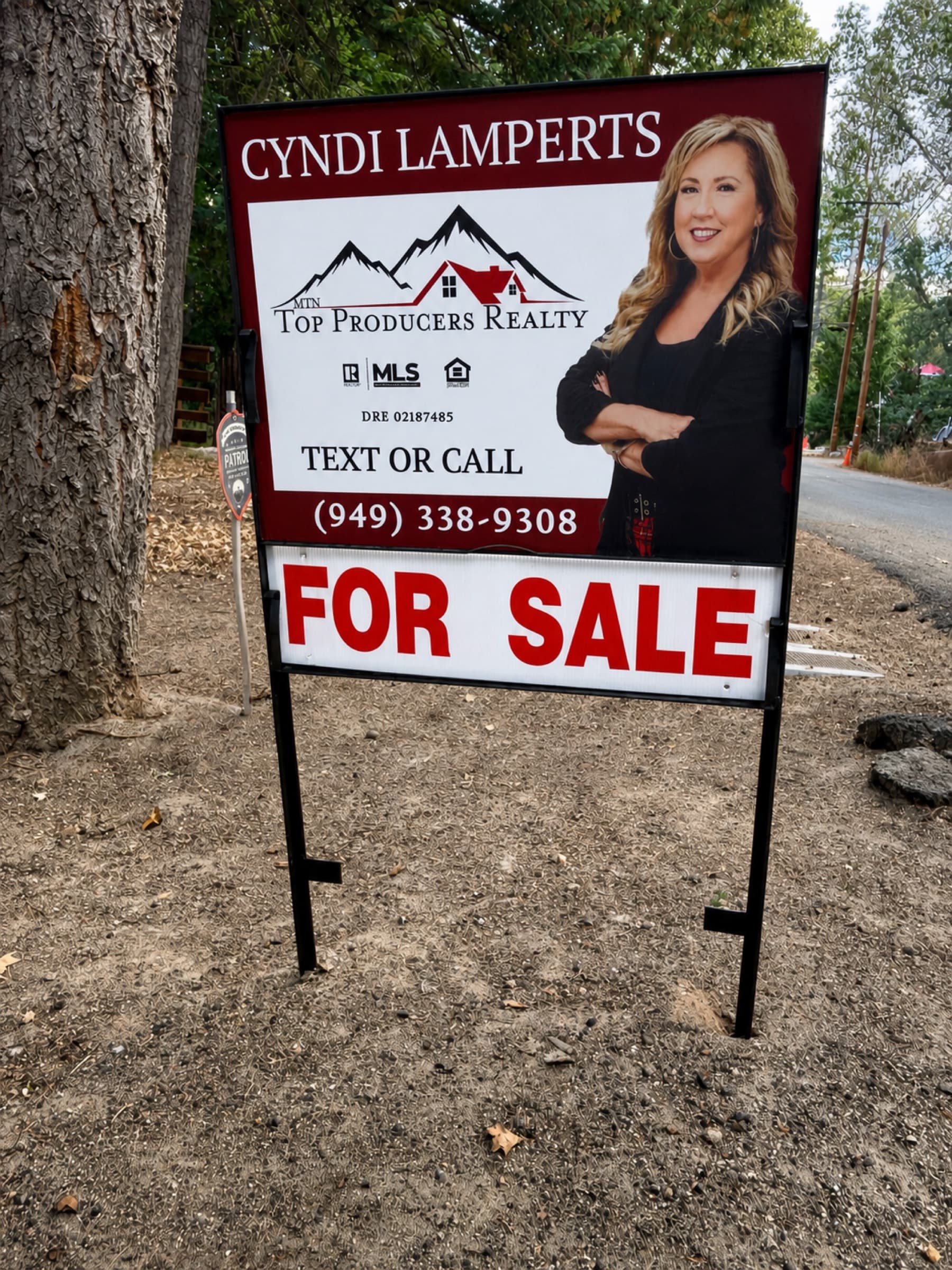
You are often selling a lifestyle and a house. Buyers may come for trees, snow, a fireplace, a deck, privacy, or recreation. They also ask about insurance, roads, parking, winter, trees, and utilities. Show what is actually there.
Prepare outside first: vegetation, driveway, parking, decks, windows, obvious repairs. Inside: clean and declutter. Cyndi does not want sellers spending a fortune because someone said every cabin must be remodeled. Paint, kitchens, and baths are case by case. Do not automatically paint over wood that buyers may want. Mountain curb appeal is a maintained wooded setting, a clear entry, and a house that looks cared for — not a suburban lawn.
Her mom on decks: sun, snow, rain, and pine needles. Safety issues deserve a professional, not a guess from a showing. For a valuation based on the property and current competition, selling a mountain home and contact Cyndi.
Outdoor recreation
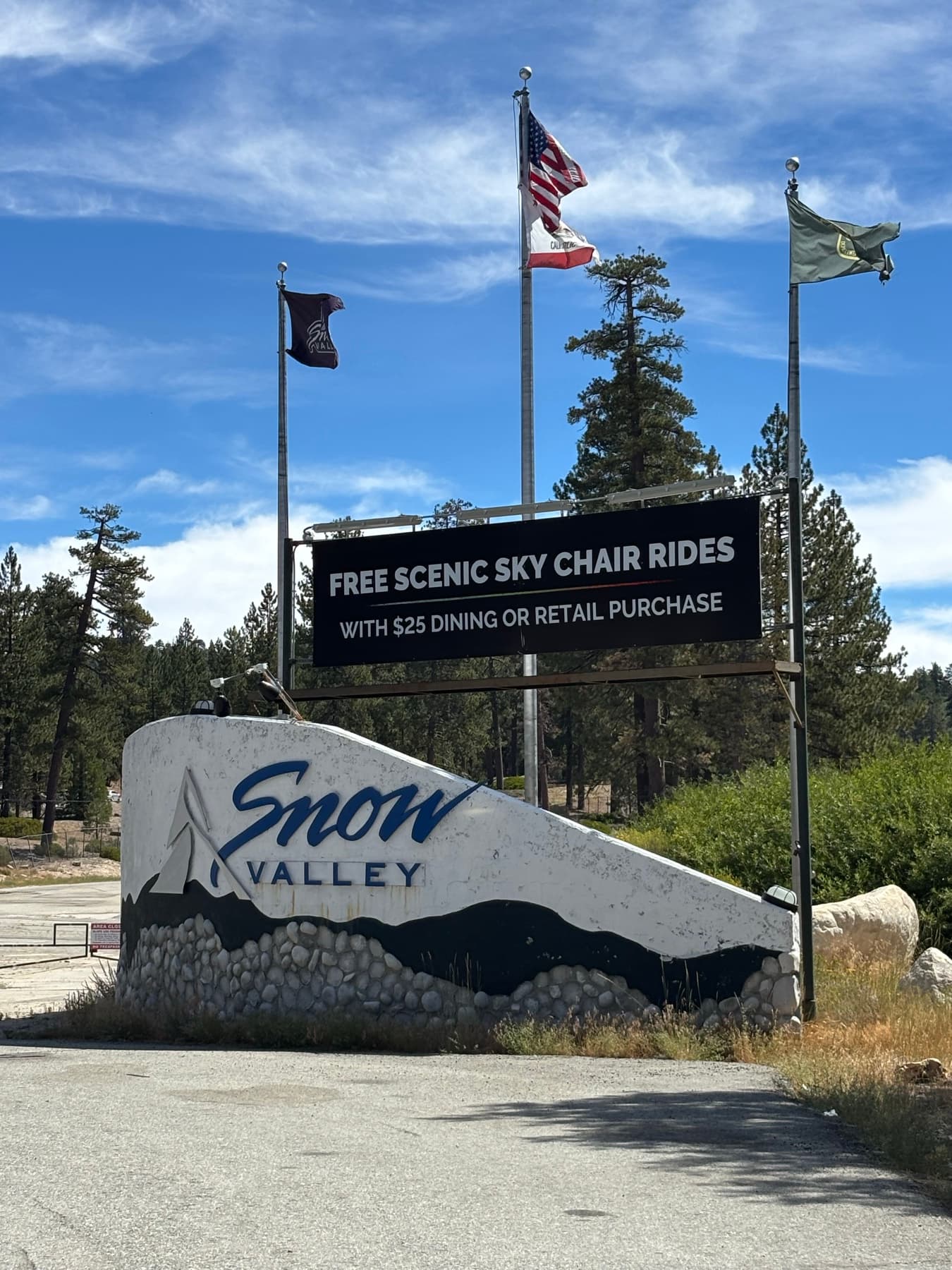
Outdoor recreation is one of the strongest reasons people look at Running Springs: forest trails, hiking, mountain biking, seasonal snow sports, and a drive to Snow Valley, Lake Arrowhead, or Big Bear. Cyndi’s point: location is part of the appeal for skiing, snowboarding, hiking, biking, or simply being outdoors. Names, hours, and access should be verified because they change.
What Outdoor Activities Are Near Running Springs?
Nearby activities include hiking and forest recreation in the San Bernardino National Forest, seasonal skiing and snow play at Snow Valley, scenic drives on the Rim, and day trips to Lake Arrowhead, Big Bear, and Lake Gregory. Heaps Peak Arboretum is a straightforward forest stop between Running Springs and Lake Arrowhead. SkyPark at Santa’s Village is in the broader Arrowhead-area mix, not downtown Running Springs.
Snow Valley Mountain Resort sits on State Route 18 above / east of Running Springs. The resort uses a Running Springs address. It is not a downtown ski-in village. Summer photos on this page show lifts and tube-park infrastructure without snow — useful for geography, not a snow report.
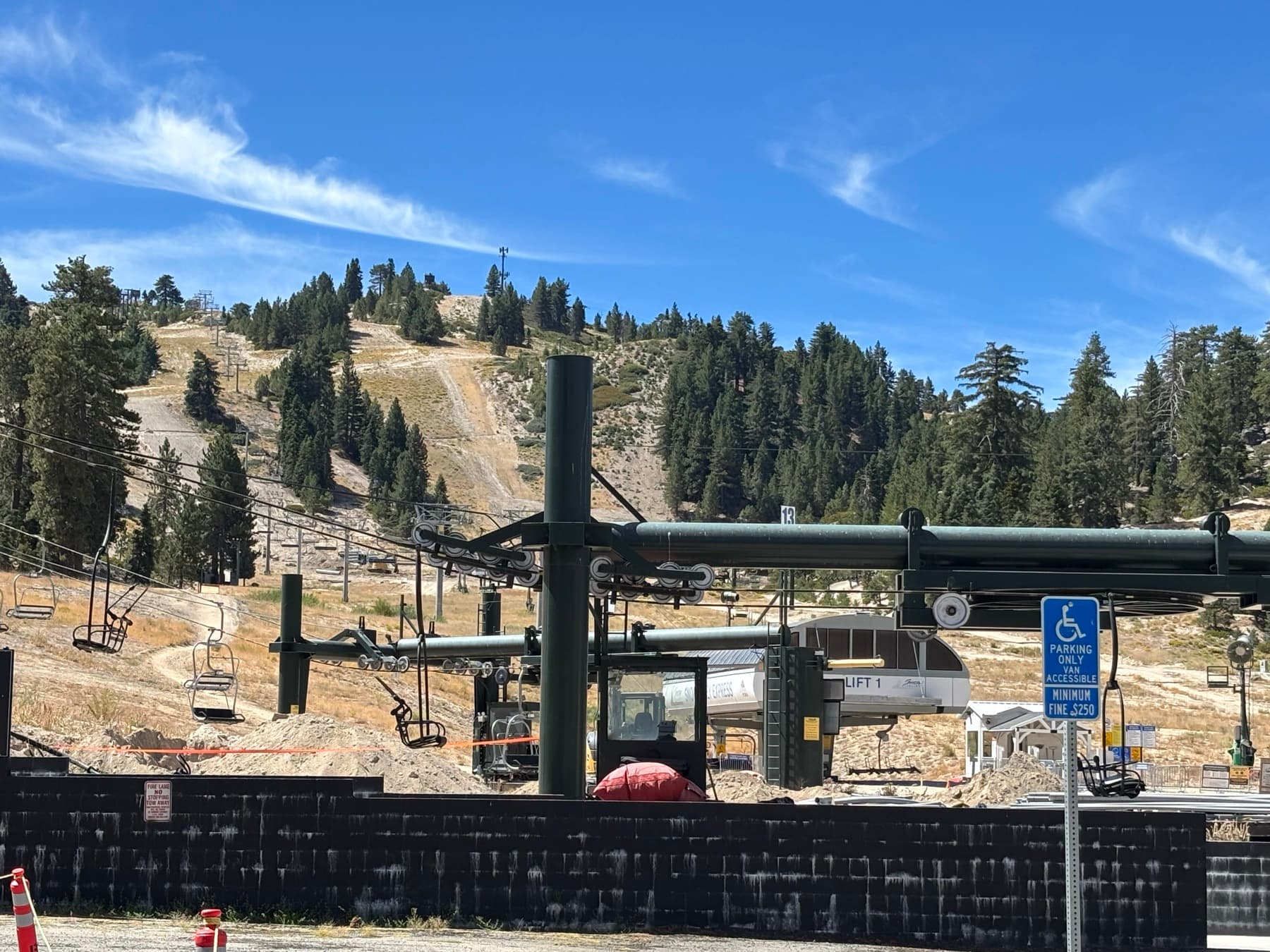
National forest land surrounds these communities. Trails, fire restrictions, and adventure-pass rules are seasonal. Nearby lakes (Arrowhead, Big Bear, Gregory) have different access rules. Wildlife is part of living in the trees — keep a respectful distance and secure trash. SkyPark at Santa’s Village is in the broader Arrowhead-area recreation mix, not downtown Running Springs.
Big Bear-area skiing is farther east along the mountain corridor. Treat it as a day trip with its own traffic and chain rules, not as a Running Springs backyard.
Outdoor Recreation Near Running Springs
This map covers parks, the highway junction, Snow Valley, ski and board retail, nearby lakes, SkyPark, and forest access — the recreation that supports living here, not only a weekend visit. Dark green markers are outside downtown Running Springs.
- 16Firehouse Playground & picnic area2677 Whispering Pines Dr
- 20SR-18 / SR-330 junctionRim of the World Hwy at SR-330
- 22Snow Valley Mountain Resort35100 CA-18
- 23Blauer Ski & Board32170 Hilltop Blvd
- 25Pali Adventures / Pali Institute30778 CA-18
- 31SkyPark at Santa’s Village · outside town28950 Rim of the World Hwy
- 33Heaps Peak Arboretum · outside town29358 Rim of the World Hwy
- 36Green Valley Lake · outside townGreen Valley Lake community
- 37Arrowbear Lake · outside townArrowbear Lake community
- 42Arrowbear Park / Tucker Ball Field · outside town33211 Arrowbear Dr
- 44San Bernardino National Forest — Arrowhead Ranger Station · outside town28104 CA-18
Things to do around Running Springs
For a homeowner, attractions are also what friends do when they visit. Scenic drives on 18, a day toward Big Bear or Arrowhead, forest walks when conditions allow, and seasonal snow play at operating resorts. This is not a tourism brochure. If an activity is why you are buying, visit in the season you will actually use it.
Utilities and mountain home systems
Not every Running Springs house uses the same systems. Some listings show public water and sewer; others may be well, septic, propane, or a mix. Electricity, internet, trash, and heating equipment are address-specific. Ask, then verify in disclosures and inspections. Do not assume the house next door proves yours.
Mountain home maintenance
Roofs and gutters take snow, needles, and sun. Decks take weather. Exterior wood weathers. Drainage on a slope protects the foundation. Driveways crack and ice. Heating systems work harder. Pipes freeze in vacant houses. Trees drop limbs after storms. Pests and wood damage are inspection topics in older cabins. Seasonal prep is cheaper than reacting during a storm. That is part of owning in the forest — seasonal care that protects the house you bought.
Full-time home vs. vacation home
Running Springs works for full-time residents and for second-home owners. The town is the same; the weekly plan is not. Full-time living asks about groceries, work, internet, medical access, winter driving, and where the cars live. A vacation or second home asks who checks after a storm, freeze protection for that plumbing, and how often you will actually make the drive. Cyndi’s second-home note: buying the house is only the beginning. Short-term rental income is not part of the purchase math until rules for that exact address are current and legal.
Is Running Springs Good for Full-Time Residents?
It can be an excellent full-time home if the town fits your normal week: shopping, work or commute, internet, services, winter driving, and parking. Cyndi wants buyers to understand full-time life, not only three beautiful days in a cabin. Her mom’s line: living in the mountains becomes normal life instead of something you only experience on vacation.
Is Running Springs Good for a Second Home?
Yes — a smaller mountain town can be a home base while you explore recreation nearby, and many buyers keep a Running Springs house as a weekend or seasonal place. Second-home ownership still needs a plan for snow, outages, leaks, and who checks the house when you are not there. Do not keep the only copies of important documents only in the mountain house.
What buyers from lower elevations may not expect
From Cyndi’s Orange County / Running Springs answers: do not compare homes only by price. You gain trees, seasons, recreation, and a different environment. You also plan for mountain weather, winter driving, home maintenance, and a different mix of nearby services. Come up as someone who might live here — including a day that is not perfect weather.
What people commonly overlook, in her list: parking, driveway, stairs, sun, trees, drainage, deck condition, winter access, heating, and storage — the unglamorous parts that run everyday ownership. Her mom on family knowledge: the mountains teach you to prepare and to slow down. Plans change because weather changed. Snow days, trees, quiet mornings, and the drive itself become part of home after enough years — not a feature sheet.
Questions to ask before buying a Running Springs home
- How steep is the driveway, and can you turn around?
- How much usable parking is there, including guests and snow storage?
- Is there level entry, or are you buying stairs in winter?
- How is the home heated, and what happens in an outage?
- Who maintains the road, and what is winter access like?
- Water, sewer or septic, propane or gas — for this address?
- Can you obtain acceptable insurance, at what cost?
- Roof, decks, trees, drainage — what does a professional say?
- If this is a vacation home, who checks it when you are gone?
- Where will you grocery shop, get fuel, and go for medical care in a storm?
Not every issue applies to every property. These are the questions Cyndi wants on the showing so you can enjoy the house you buy.
Numbered Running Springs directory
Permanent numbers for this page. Cranberry badges are in Running Springs. Dark green badges are outside town. Businesses change; confirm hours and whether a shop is still operating before you drive across the mountain for it.
Running Springs Fine Foods
31987 Hilltop Blvd, Running Springs, CA 92382
The grocery most people mean when they say they shop in town. Stock and hours change — check before you treat it as the only plan in a storm.
76 fuel station
32124 Hilltop Blvd, Running Springs, CA 92382
In-town fuel on the Hilltop / SR-18 commercial strip. Mountain prices are often higher than the valley. Some residents fill down the hill when they can.
United States Post Office — Running Springs
2641 Palo Alto Way, Running Springs, CA 92382
Local counter and P.O. boxes. Package delivery to a house can change with snow, a steep driveway, or a gate — ask the carrier and the seller how mail actually arrives at the address you are buying.
Running Springs Water District office
31242 Hilltop Blvd, Running Springs, CA 92382
Customer water and sewer questions during office hours (the district publishes Monday–Friday 7:30 a.m.–4:30 p.m.). After-hours water or sewer emergencies: (909) 867-2340. Fire and medical emergencies are still 911.
Running Springs Fire Station 51 (headquarters)
31250 Hilltop Blvd, Running Springs, CA 92382
Call 911 for fire or medical emergencies. (909) 867-2630 is the non-emergency administrative number during published business hours, not a substitute for 911.
Running Springs Fire Station 50
32151 Hunsaker Way, Running Springs, CA 92382
Crew quarters on Hunsaker Way. Same rule: 911 in an emergency; (909) 867-2630 for non-emergency fire or ambulance questions during published hours.
Saw Hilltop Automotive / NAPA Auto Parts
32005 Hilltop Blvd, Running Springs, CA 92382
Parts, vehicle work, and a practical stop for traction devices when they are in season. Confirm stock — chains and cables sell out when Caltrans posts controls.
Rusty Hammer Hardware
31930 Hilltop Blvd, Running Springs, CA 92382
Local hardware and home supplies on Hilltop Blvd. Hours and inventory change; this is not a full big-box store.
Mountain Top Producers Realty — Cyndi’s office
31984 Hilltop Blvd, Running Springs, CA 92382
Cyndi Lamperts works here. It is a real-estate office, not a residence. Call or message before you drop in.
Old Country Coffee Shop
32019 Holiday Ln, Running Springs, CA 92382
Longstanding coffee shop / diner just off Hilltop. Confirm hours before you count on breakfast.
LuluBelle’s Coffee House and Bakery
31621 Pleasant Dr, Running Springs, CA 92382
Coffee, bakery, and a coworking space on the same site. The shop’s own site has listed daily morning hours — confirm before you go.
Hilltop Chinese Restaurant
31956 Hilltop Blvd, Running Springs, CA 92382
Hilltop Blvd restaurant. Independent restaurants change hours and ownership — confirm it is open before you plan a meal around it.
Running Springs Rural Health Clinic
2642 Palo Alto Way, Running Springs, CA 92382
Mountains Community Hospital clinic in town. MCH publishes Tuesday–Thursday 8:00 a.m.–4:30 p.m. and Saturday 7:00 a.m.–1:00 p.m. This is not a 24-hour emergency room. For a true emergency, call 911.
Charles Hoffman Elementary School
2851 Running Springs School Rd, Running Springs, CA 92382
Rim of the World Unified School District campus in Running Springs (California Department of Education). Attendance boundaries change — verify the specific address with the district. This page does not rank schools.
Running Springs Branch Library
2677 Whispering Pines Dr, Running Springs, CA 92382
San Bernardino County Library branch. Confirm current hours and programs on the county library site before you visit.
Firehouse Playground & picnic area
2677 Whispering Pines Dr, Running Springs, CA 92382
Rim of the World Recreation and Park District playground and picnic area. A community park, not a private amenity that comes with every house. Picnic shelter reservations are handled by the district.
Robert Hootman Community Center
2985 Running Springs School Rd, Running Springs, CA 92382
Rim of the World Recreation and Park District community center. The Running Springs Area Chamber notes some public meetings here — confirm the current calendar.
Community restrooms (Commercial Way)
31960 Commercial Way, Running Springs, CA 92382
Public restrooms listed by Rim of the World Recreation and Park District in downtown Running Springs.
Running Springs Area Chamber of Commerce
2929 Running Springs School Rd, Running Springs, CA 92382
Local business and civic group for Running Springs, Arrowbear, and Green Valley Lake. The chamber asks visitors to come by appointment.
SR-18 / SR-330 junction
Rim of the World Hwy at SR-330, Running Springs, CA 92382
The highway hinge that puts Running Springs between the valley (SR-330) and the Rim (SR-18). In a storm, this is also where chain controls and backups show up. Check Caltrans before you leave: QuickMap or 1-800-427-ROAD.
Mountain Transit — downtown Running Springs stop
Palo Alto Way & Commercial Way, Running Springs, CA 92382
Rim Route 4 stop (Palo Alto & Commercial Way bus shelter). Schedules change — read the current Mountain Transit timetable, not an old blog post.
Snow Valley Mountain Resort
35100 CA-18, Running Springs, CA 92382
On SR-18 about five miles east of downtown — a Running Springs mailing address, not a ski-in village. Hours, tickets, and snowmaking change. Confirm operations before you go.
Blauer Ski & Board
32170 Hilltop Blvd, Running Springs, CA 92382
Ski and snowboard shop on Hilltop Blvd. Seasonal hours. Confirm they are open if you are counting on rentals the morning of a storm.
Neo’s Pizza House
32000 Hilltop Blvd, Running Springs, CA 92382
Hilltop Blvd pizza shop (California ABC license on file for this address). Confirm current hours; independent restaurants change.
Pali Adventures / Pali Institute
30778 CA-18, Running Springs, CA 92382
Seasonal overnight camp and outdoor education campus west of the downtown strip, not a public park. Access is via Live Oak Drive off SR-330 / SR-18 as published by the camp.
Arrowbear Lake Fire Station 271
Arrowbear Lake — just east of Running Springs
33045 Rim of the World Hwy, Arrowbear Lake, CA 92382
Nearby fire station serving the Arrowbear corridor. Still call 911 in an emergency. Do not assume this is a Running Springs headquarters station.
Mountains Community Hospital & Emergency Room
Lake Arrowhead — not in Running Springs
29101 Hospital Rd, Lake Arrowhead, CA 92352
Closest hospital campus for this Rim community. Main number (909) 336-3651. Emergency room (909) 436-3080. Call 911 for a medical emergency rather than driving yourself if you are unsafe to drive.
San Bernardino County Sheriff — Twin Peaks Station
Twin Peaks — patrol includes Running Springs
26010 Highway 189, Twin Peaks, CA 92391
Call 911 for crimes in progress or anyone in danger. (909) 336-0600 is the station non-emergency line. Running Springs does not have its own police department.
Rim of the World Senior High School
Lake Arrowhead area — not in Running Springs
27400 CA-18, Lake Arrowhead, CA 92352
Rim of the World Unified campus west of Running Springs. Verify assignment for a specific address with the district. This page does not rank schools.
Mary P. Henck Intermediate School
Lake Arrowhead area — not in Running Springs
730 Rhine Rd, Lake Arrowhead, CA 92352
Rim of the World Unified intermediate campus. Confirm the current feeder pattern for the house you are considering.
SkyPark at Santa’s Village
Skyforest / Lake Arrowhead area
28950 Rim of the World Hwy, Skyforest, CA 92385
Year-round outdoor attraction west of Running Springs on SR-18. What is open changes by season — confirm before you promise kids a specific activity.
Bella’s Antiques
Skyforest — not downtown Running Springs
935 Kuffel Canyon Rd, Skyforest, CA 92385
Antique shop in the Skyforest / Kuffel Canyon area, a short drive west. It is not a Running Springs storefront.
Heaps Peak Arboretum
San Bernardino National Forest, between Running Springs and Lake Arrowhead
29358 Rim of the World Hwy, Skyforest, CA 92385
Forest Service–area arboretum and trail on SR-18. Adventure Pass, fire restrictions, and trail conditions change — check current rules before you park.
Stater Bros. Markets
Lake Arrowhead Village area
28100 Lakes Edge Rd, Lake Arrowhead, CA 92352
Larger grocery than the Running Springs market. Many full-time residents split errands between #1 in town and a bigger store here or in Blue Jay.
Jensen’s Finest Foods
Blue Jay — not in Running Springs
27264 CA-189, Blue Jay, CA 92317
Full grocery in Blue Jay. Do not confuse this with the Running Springs market at #1 (that building has had other grocery names in the past).
Green Valley Lake
Northeast of Running Springs
Green Valley Lake community, Green Valley Lake, CA 92341
Smaller lake community up the road. Quieter, and winter access is its own question. Drive it instead of assuming it is “just like Running Springs.”
Arrowbear Lake
Immediately east of Running Springs
Arrowbear Lake community, Arrowbear Lake, CA 92382
Small lake and neighborhood just east of town. Same mountain weather, different streets and driveways.
San Bernardino County Fire Station 91
Lake Arrowhead — building signage can read Lake Arrowhead
301 S Highway 173, Lake Arrowhead, CA 92352
County fire station on the Arrowhead side of the Rim. Call 911 in an emergency. Non-emergency (909) 336-0660. Photos of this station are not photos of Running Springs Station 51.
Lake Arrowhead Rural Health Clinic
Lake Arrowhead hospital campus
29099 Hospital Rd, Ste. 200, Lake Arrowhead, CA 92352
MCH clinic next to the hospital. Published weekday hours 8:00 a.m.–4:30 p.m. Not a substitute for the emergency room at #27.
Lake Arrowhead Village
Lake Arrowhead — shopping and lakeside visitor area
Lake Arrowhead Village, Lake Arrowhead, CA 92352
Shops and restaurants around the lake. Lake access and lake rights are parcel-specific and are not implied by a visit to the Village.
Neo’s Deep Creek Drive-In
Arrowbear Lake
32890 Hilltop Blvd, Arrowbear Lake, CA 92382
Drive-in / casual food on the Arrowbear stretch of Hilltop. Confirm it is open; independent restaurants change.
Arrowbear Park / Tucker Ball Field
Arrowbear Lake
33211 Arrowbear Dr, Arrowbear Lake, CA 92382
Rim of the World Recreation and Park District fields in Arrowbear. Not a Running Springs backyard amenity.
Rim of the World Unified School District office
Blue Jay / Lake Arrowhead area
27315 North Bay Rd, Blue Jay, CA 92317
District office for enrollment and boundary questions. Use the district, not a real-estate flyer, for the address you are buying.
San Bernardino National Forest — Arrowhead Ranger Station
Skyforest
28104 CA-18, Skyforest, CA 92385
USGS-mapped Forest Service station on SR-18. Public counter hours have been limited at times — confirm current visitor services on the Forest Service offices page before you drive over for a permit or a map.
76 fuel station (Blue Jay)
Blue Jay — extra fuel option outside Running Springs
27243 CA-189, Blue Jay, CA 92317
Another fuel stop on the Arrowhead / Blue Jay side of the Rim when the in-town station is inconvenient or you are already over there for groceries.
Running Springs Water District — collection system building
2536 Hunsaker Dr, Running Springs, CA 92382
District wastewater collection facility — not a public visitor stop. After-hours sewer emergencies: (909) 867-2340. Call 911 if someone is hurt.
San Bernardino County Fire Station 26
Twin Peaks
737 Grandview Rd, Twin Peaks, CA 92391
County fire station west of Running Springs. 911 for emergencies; (909) 337-8326 is the station non-emergency line published by the fire district.
San Bernardino County Fire Station 92
Lake Arrowhead
981 Highway 173, Lake Arrowhead, CA 92352
Another county fire station on the Arrowhead side of Highway 173. 911 for emergencies; (909) 337-3002 non-emergency as published by the fire district.
986 Pharmacy (Mountains Community Hospital campus)
Lake Arrowhead — medical office building next to the hospital
29099 Hospital Rd, Lake Arrowhead, CA 92352
Pharmacy listed by MCH in the medical office building at 29099 Hospital Road. Confirm hours. Running Springs does not have a full-service pharmacy of this type in the downtown strip.
Lake Arrowhead Dental Clinic (MCH)
Lake Arrowhead hospital campus
29099 Hospital Rd, Ste. 112, Lake Arrowhead, CA 92352
MCH dental clinic. Published weekday hours 8:00 a.m.–4:30 p.m. Not an emergency room.
Running Springs FAQ
Is Running Springs a good place to live?
Yes, for people who want forest surroundings, four-season mountain living, outdoor recreation, and a smaller town that still sits in Southern California. Cyndi describes it as a real mountain community rather than a place people only visit. It is a strong fit when you like that quieter rhythm and are willing to prepare for winter weather, driveway access, and mountain-home upkeep.
What is it like to live in Running Springs?
Cyndi describes it as a real mountain community, not only a place people visit. You get trees, snow, seasons, and outdoor recreation — and also everyday life: work, shopping, weather, and taking care of a house. Her mom’s line: living in the mountains becomes normal life instead of something you only experience on vacation.
Does Running Springs get snow?
Yes. Winter is part of ownership here, and snow is part of the four-season appeal. Cyndi does not publish a single snowfall number for the whole mountain, because elevation, sun, and the lot change how a winter actually feels. A house that is easy in August can feel different in a storm. Check current weather and road conditions before you travel.
Do you need four-wheel drive in Running Springs?
Four-wheel drive is helpful on many streets after a storm. It does not erase ice, and it does not replace proper tires or following posted chain controls. The better question is whether you can reach that specific driveway and park safely in the vehicle you will actually own.
What kinds of homes are available in Running Springs?
A mix: older cabins, traditional mountain homes, A-frames, multi-level houses on slopes, updated properties, rustic interiors, and more modernized homes. Two houses on the same street can live completely differently. Look at driveway, parking, stairs, and winter access — not only the fireplace.
Is Running Springs suitable for full-time living?
It can be an excellent full-time home if the town fits your normal week: shopping, work or commute, internet, services, winter driving, and where you park. Cyndi wants buyers to understand full-time life, not only three beautiful days in a cabin.
Are there vacation homes and second homes in Running Springs?
Yes, and Cyndi treats that as worth considering. A smaller mountain town can be a home base while you explore recreation nearby. Second-home ownership still needs a plan for snow, outages, leaks, and who checks the house when you are not there.
Can people commute from Running Springs?
Some people do. Cyndi will not promise a drive time. Weather, traffic, which route you use, and where you are going all change the trip. Drive the actual route more than once, including a day that is not convenient.
What should buyers know before purchasing a mountain home?
Decide how you will use the house first. Then look at road, driveway, parking, stairs, roof, trees, deck, drainage, heating, utilities, insurance, and winter access. A general inspection is a starting point; the property may need specialists. Cyndi is not the inspector.
How are Running Springs homes different from homes below the mountains?
You are not duplicating Orange County in the pines. You gain trees, seasons, and recreation. You also plan for mountain weather, winter driving, more maintenance, and a different mix of nearby services. Compare lifestyle, not only price.
Is Running Springs close to skiing?
Snow Valley Mountain Resort is on State Route 18 east of town (the resort uses a Running Springs mailing address). Operations, hours, and tickets change — confirm before you plan a trip. Big Bear-area skiing is farther along the mountain corridor.
What outdoor activities are nearby?
Forest recreation, hiking, seasonal snow play and skiing, scenic drives, and nearby lakes in other communities. SkyPark at Santa’s Village is in the broader Arrowhead-area recreation mix, not downtown Running Springs. Verify current trail, weather, and attraction details.
What should homeowners prepare for during winter?
Driveway and walkway clearing (usually the owner’s job), somewhere to put snow, traction devices when chain controls are in effect, heat, pipes if the house may sit vacant, and a plan for power interruptions. Do not shovel snow back into the roadway after a plow.
What should buyers know about driveways?
Cyndi treats the driveway as part of the property. How steep is it? Can you turn around? How many cars? How will you carry groceries in snow? A steep driveway is not automatically a no — but buy the winter driveway, not only the summer one.
Is parking important when shopping for a mountain home?
Yes. Useful parking for two vehicles, guests, or gear can be hard to add later on a sloped lot. A garage plus extra parking is a real mountain feature, not a footnote.
What should buyers know about mountain-home insurance?
Start early, with the actual address, and talk to a licensed insurance professional. Coverage and cost are property-specific. A lender may require acceptable insurance. Cyndi is not an insurance agent. See mountain home insurance. Consumer information is published by the California Department of Insurance (California Department of Insurance). Wildfire preparedness education is published by CAL FIRE (CAL FIRE) and Ready for Wildfire (Ready for Wildfire).
What should second-home owners consider?
Who watches the house, how you winterize that specific plumbing and heat system, outages, snow, local emergency alerts, and defensible space even when you are down the hill. Do not keep the only copies of important documents only in the mountain house.
Where do Running Springs residents grocery shop?
There is a grocery in town (Running Springs Fine Foods). Many households also drive to a larger store in Lake Arrowhead or Blue Jay. Confirm hours before you rely on any market in a storm.
How does Running Springs compare with Lake Arrowhead?
They are close enough that buyers often consider both, but they do not feel the same. Lake Arrowhead has the private lake and a stronger resort and second-home identity. Running Springs is more of a smaller mountain town connected to forest and outdoor recreation. Cyndi wants you to spend time in both instead of choosing from photographs.
How does Running Springs compare with Big Bear?
Big Bear is a much larger tourism and recreation destination. Running Springs is smaller and generally feels less like living inside a major resort. Some people like going toward Big Bear for skiing, restaurants, or activities, then coming home to a quieter forest town.
What number do I call for an emergency in Running Springs?
Call 911 for fire, medical emergencies, and crimes in progress. Local fire stations and the sheriff have non-emergency numbers for questions that are not emergencies. Water or sewer leaks after hours go to the Running Springs Water District emergency line, not 911, unless someone is hurt.
How do the numbered maps on this page work?
Each place has one permanent number, from #1 through #50. That same number appears on the map marker, in the list under each map, and in the directory at the bottom of the page. Cranberry markers are in Running Springs. Dark green markers are nearby resources outside town.
Working with a local real estate professional
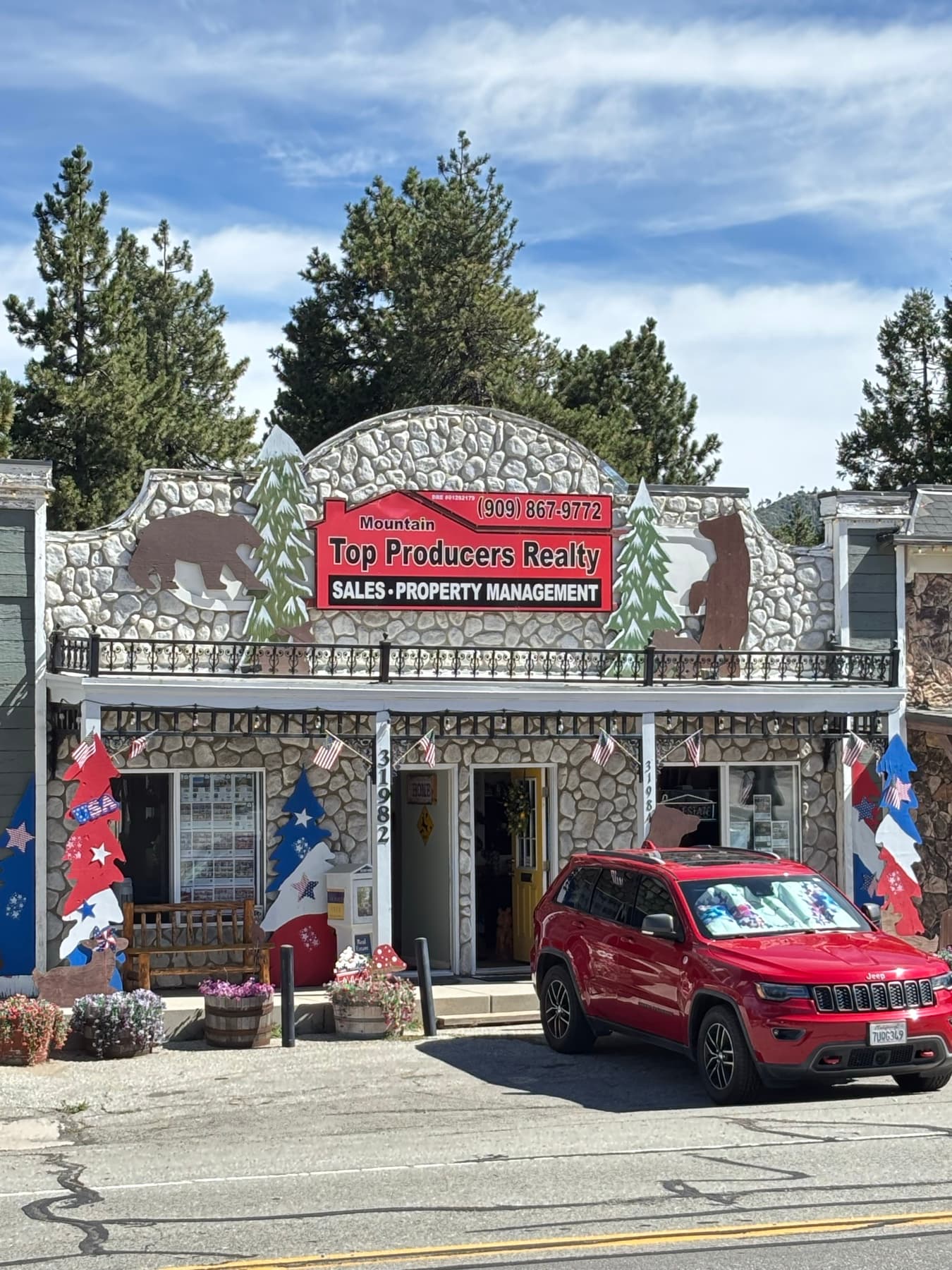
Cyndi Lamperts is a REALTOR® (DRE #02187485) with Mountain Top Producers Realty. She works from the Running Springs office at 31984 Hilltop Blvd and serves this mountain market with her mother, Loretta Baldivid. “Your Mountain Expert” means she treats driveway, parking, snow, and community differences as part of the job — not that she is your inspector, contractor, engineer, insurance agent, lender, or attorney. She says so when she does not know, then finds out.
If you are ready to look at streets, not only this article: Running Springs real estate, current featured listings, selling, buying from Orange County, about Cyndi, or contact.