
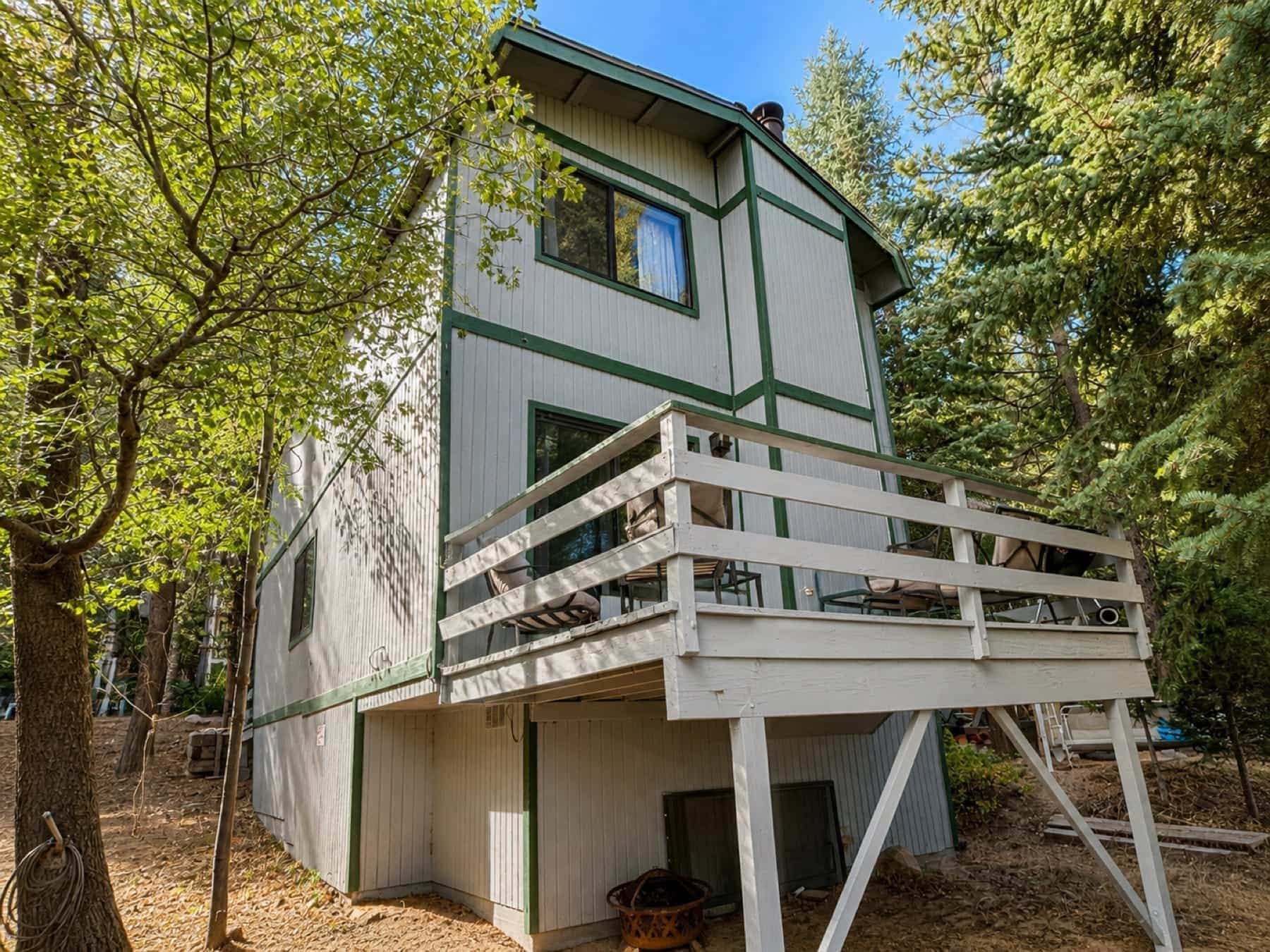
How to look at a mountain property before you offer
Start before the front door. Look at the slope, the trees, the drainage, the retaining walls, the roof, and the decks. Ask how you will use the house, including in winter. Then hire the professionals who actually diagnose. Cyndi helps you see the next useful question. Walls and hillside foundations have a closer look on retaining walls and hillside foundations.
Driveway grade, parking count, stairs versus level entry, and snow storage already have a dedicated page: mountain driveways and parking. Highway chains live on winter access. This page is the rest of the showing: water, trees, decks, crawl space, additions, and permits. Questions a pretty afternoon hides: questions mountain buyers don’t know to ask. It welcomes Lake Arrowhead, Running Springs, Crestline, and Big Bear, and each town keeps its own living guide. Confirm Cyndi’s license on the California Department of Real Estate lookup. She is a REALTOR® (DRE #02187485) with Mountain Top Producers Realty.
- 1
Start outside, then split the driveway questions
Look at how the house sits on the lot: slope, trees, roof, decks, drainage, retaining walls. Driveway, parking, and stairs have their own hub at driveways and parking. The kitchen photographs can wait a few quiet minutes. The lot is worth a slow look.
- 2
Ask where the water goes
Look uphill, at the roof, gutters and downspouts if present, the driveway, around the foundation, then downhill. A dry showing day is one lovely afternoon. A storm tells more of the story. A concern is a welcome reason to bring the right professional.
- 3
Enjoy the trees and look at them carefully
Notice proximity to the structure, roof, deck, and driveway. Enjoy the trees, and leave health questions for someone who does that work. Defensible-space education is CAL FIRE’s: CAL FIRE and Ready for Wildfire.
- 4
Look at decks and railings from safe areas
Surface, railings, stairs, and visible supports live in weather year after year. The view is a gift. Let an inspector or qualified professional evaluate what you are standing on.
- 5
Leave an unsafe crawl space to a professional
A crawl space can hold moisture, plumbing, insulation, pests, and structure. On a showing, please stay out of spaces that feel inaccessible or unsafe. A thorough inspection is there to look with care.
- 6
Ask how the house grew
Additions, enclosed decks, and converted garages need history: what changed, roughly when, and how the space is represented. A finished room can be lovely. Permitted living area is its own question. For unincorporated San Bernardino County, start with Land Use Services permits (county permits) and EZOP (county EZOP). Cities have their own departments.
Where does the water go?
Cyndi’s favorite lot question. Look uphill. Look at the roof. Look at gutters and downspouts where they exist. Look at the driveway. Look around the foundation. Then look downhill. Water needs somewhere to go. A property can look completely dry on the showing. Heavy rain and snowmelt tell more of the story.
Cyndi’s mom: after years in the mountains, you learn that water always deserves attention. If something about drainage concerns you, investigate with the appropriate professional.
Drainage
Water needs somewhere to go. Look uphill and downhill, and at a dry patio too. Stains are gentle questions worth a follow-up.
Decks and balconies
They can be another living room. They also take sun, snow, rain, and pine needles. Look at what you are standing on.
Crawl space
The parts guests never see still matter. Hire someone qualified. A showing is for looking. The crawl belongs with that person.
Additions and enclosed space
Ask what was added and how it is represented. When the records are unclear, Cyndi will help you look at them with care.
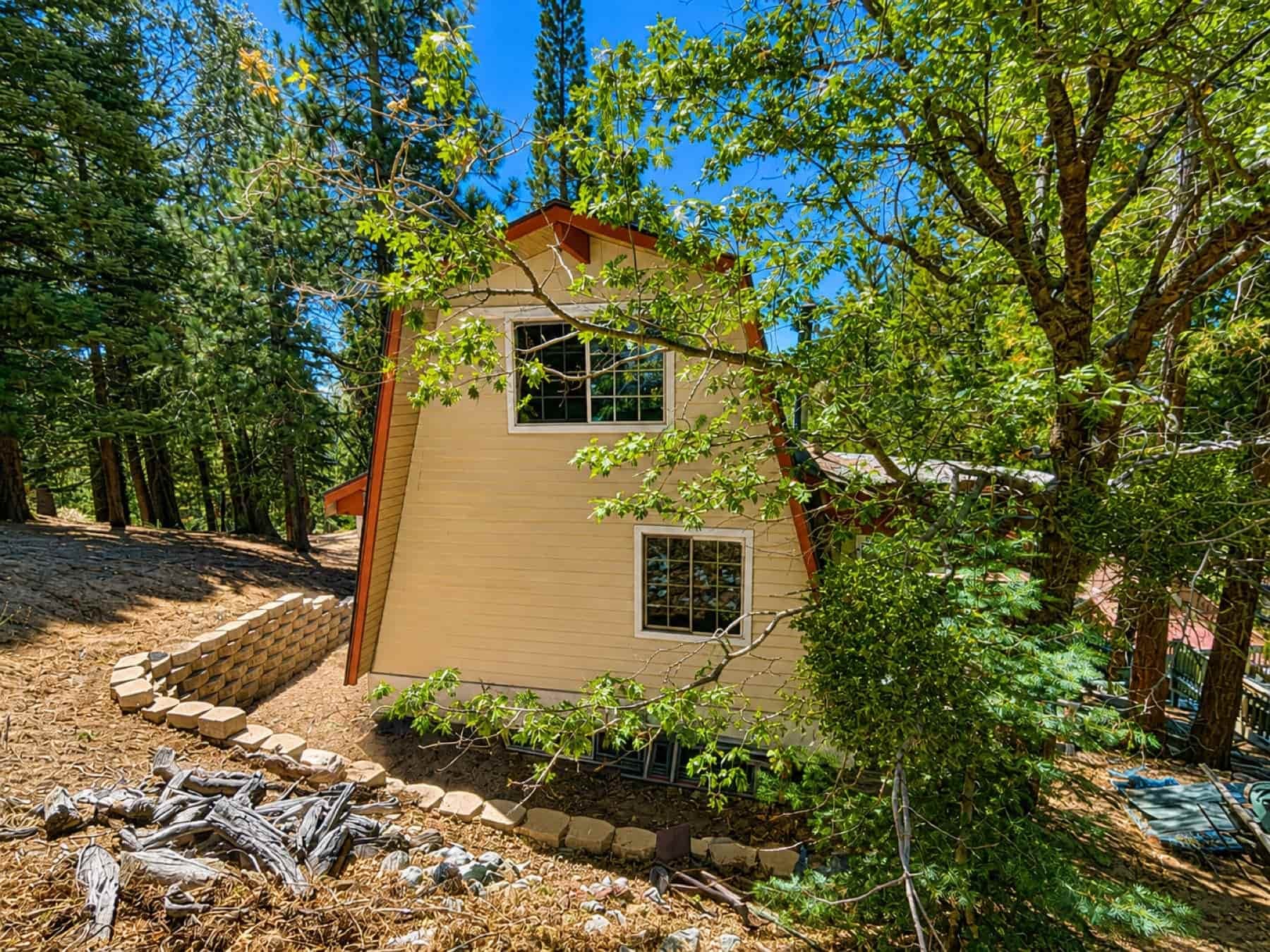
Retaining walls are common on sloped lots. Look for visible leaning, cracking, movement, or drainage that makes you question the wall. A qualified person can read those clues with you. On a hillside, what is happening around the house can matter as much as the kitchen.
Trees, roofs, stains, and smells
Enjoy the trees. Also notice how close they are to the structure, roof, deck, and driveway. Cyndi’s mom: you learn to look up — branches, wind, snow, and maintenance. Defensible-space education belongs to CAL FIRE and Ready for Wildfire. Tree work and an insurance policy are separate conversations. Quote mountain home insurance and CDI for coverage questions on the actual address.
From the ground, Cyndi can help you spot roof questions: general condition, shape, drainage, gutters, penetrations, age, and history if the seller has it. Structural soundness is a kind question for a roofer. Mountain weather is why homeowners learn to care for the roof before water is inside.
Strong musty, damp, sewage, fuel, smoke, or unusual persistent odors deserve questions. A smell is information. Ask about it, and let the inspector look when the question needs a specialist. Cyndi’s mom: if something smells wrong, keep asking. “Just an old cabin smell” leaves the question open. Ceiling or wall stains have more than one possible story, including an old repair. Ask what caused the stain and what was done. Water leaves clues.
Older cabins, windows, and postponed work
What should I look for in an older cabin?
Enjoy the character first. Older cabins can have woodwork, fireplaces, and layouts that are hard to reproduce. Then ask about electrical, plumbing, heating, windows, insulation, moisture, the foundation, the roof, and earlier changes. An old house can be a wonderful house. An updated house still needs the same questions. Cyndi’s mom: keep asking after the charm hits. Some of the prettiest parts of an old cabin can make you fall in love before you have looked at the rest.
What should I notice around the windows?
Look at condition, whether they operate, staining, condensation, and deterioration around the frames. Older windows are a purchase you should understand. They can affect comfort and maintenance. If something concerns you, have it evaluated. Cyndi’s mom: you notice windows a lot more when you are living through winter. Drafts and condensation are easy to skip on a beautiful summer showing.
How can I recognize postponed maintenance?
It is usually a pattern: peeling finishes, damaged trim, neglected decks, staining, deteriorated exterior materials, broken pieces, or several repairs that look postponed. That pattern means understand what you are buying. Cyndi’s mom: mountain houses will always give you something to maintain. The problems get bigger when you keep telling yourself you will do it next year. After you own the house, trees, decks, and drainage are on mountain home maintenance.
Specialists, heat, propane, septic, and chimneys: mountain home inspections. After an offer is accepted, timing and findings: inspection period. Choosing a town: which mountain community. When you are ready to write: making an offer on a mountain home.
Decks and balconies
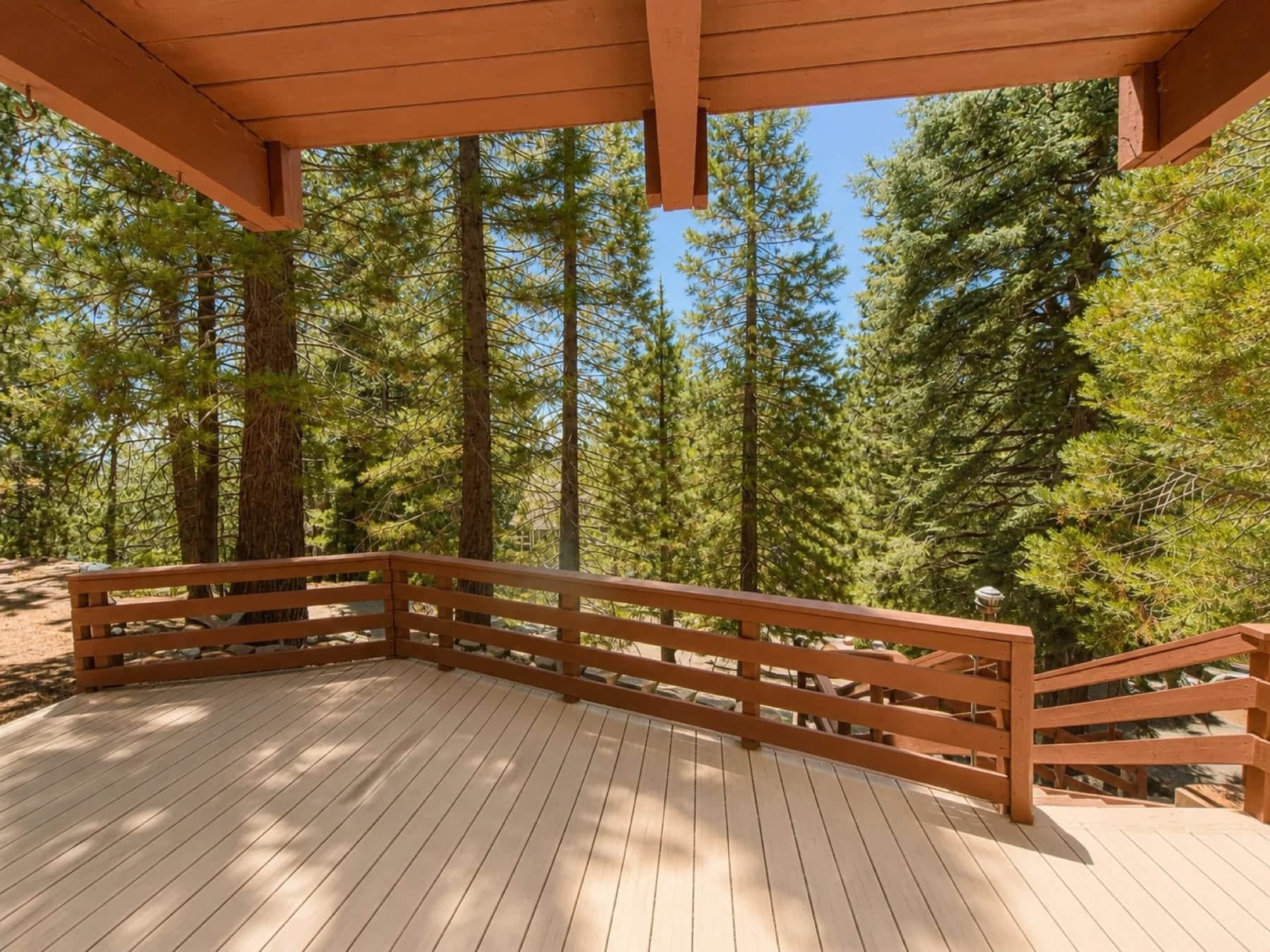
Mountain decks can be incredible living spaces. They are also exposed year after year. From safe, accessible areas, look at the surface, railings, stairs, and visible supports. Enjoy the view, and still notice what you are standing on. Let the inspector or a qualified professional evaluate actual condition. After you own it, repair or replace, trees, and drainage are on mountain home maintenance.
Crawl space
Most buyers would rather spend the showing in the rooms they will love. Access, moisture, plumbing, insulation, pests, and structure may still belong in the inspection. Please leave unsafe or hard-to-reach spaces for that visit. Cyndi’s mom: the parts you see less often still need attention. Homeowners sometimes improve what guests see and forget what is underneath.
Additions, enclosed decks, converted garages, and permits
Mountain houses often evolve. Owners change things because the family needs change, which is why the history of an older house matters. Ask what was added, roughly when, who did the work if known, and what documentation exists. Ask which rooms came later. An enclosed deck can look like living space and still be a useful room of its own. Original living area is a separate question. Ask how it got there, when it was enclosed, and how the space is represented. A converted garage can add a room and remove the covered parking you wanted after a storm. Cyndi’s mom: after a big winter, you may appreciate a garage differently. Ask whether you would rather have the garage before you count that room as living area. Parking detail stays on driveways and parking. What you still hope to build, including RV parking, a fence, or a garage, is what you can do with the lot.
Start with seller disclosures and property records, then the local authority when needed. A finished look is a feeling. A permit is a record. Missing paperwork can still have a simple story. Verify with care. For many unincorporated Rim addresses, San Bernardino County Land Use Services explains how to obtain permits at lus.sbcounty.gov/building-safety-home/permits and through EZ Online Permitting. The City of Big Bear Lake and other cities have their own departments. If you discover work that may need a permit, take a breath and still look into it. Learn what changed, how the space is listed, and how it could affect financing, insurance, appraisal, future improvements, or resale. Cyndi’s mom: something that feels easy today may matter when you remodel or eventually sell. What opening up an older cabin can uncover is remodeling an older mountain cabin. Understand what you are taking ownership of.
Orange County buyers often start with buying from Orange County. Town lifestyle stays on living in Running Springs, living in Lake Arrowhead, living in Crestline, and living in Big Bear.
Mountain showing FAQ
Short, kind answers for the lot. Walking the address, and hiring an inspector, still come first.
What should I look at before I walk inside a mountain house?
Road, how the house sits on the lot, trees, drainage, retaining walls, roof, and decks. Driveway, parking, and stairs are covered in detail at driveways and parking. Cyndi Lamperts (DRE #02187485) starts outside. License lookup: DRE license lookup.
Where does the water go on a mountain lot?
That is one of Cyndi’s favorite showing questions. Look uphill, at the roof and gutters, the driveway, around the foundation, then downhill. A dry Saturday is one sweet day. Snowmelt tells more of the story. If drainage concerns you, bring the appropriate professional.
What should I notice about trees around a mountain home?
Enjoy them, then look at distance to the roof, deck, and driveway. Health and removal are kind questions for a tree professional. For defensible-space education use CAL FIRE (CAL FIRE) and Ready for Wildfire (Ready for Wildfire). Vegetation work and an insurance policy are separate conversations. Quote the California Department of Insurance for consumer information: California Department of Insurance.
What should I look at on a mountain deck?
From safe, accessible areas: surface, railings, stairs, and visible supports. Weather works on decks year after year. Cyndi’s mom: everybody loves the deck with coffee; owning it means maintaining it. Let an inspector or qualified professional evaluate condition. The view is a gift. The structure is their question.
Should I crawl under the house on a showing?
Please stay out of unsafe or inaccessible spaces. A crawl space can contain moisture, plumbing, insulation, pests, and structure worth an inspector’s time. Cyndi hopes you will leave that look to the inspector.
What should I ask about an addition or enclosed deck?
What was added, roughly when, who did the work if known, and what permits or records exist. Extra square footage and an enclosed deck can be lovely, and legal living area is its own question. For many unincorporated mountain addresses start with San Bernardino County Land Use Services (county permits) and EZ Online Permitting (county EZOP). Incorporated cities have their own building departments.
What if an improvement may not have been permitted?
Take a breath, and still look into it. Find out what actually changed, how the space is represented, and what records show. Then buyers can consult the local authority and qualified professionals and consider financing, insurance, appraisal, future work, and resale. Cyndi will sit with you while those records get a careful look. Confirm her license at DRE license lookup.
Does a stain or a smell mean I should walk away?
It depends on the house, and that is okay. Musty, damp, sewage, fuel, smoke, or persistent unusual odors deserve questions. Ceiling or wall stains have more than one possible story, including old repairs. Ask what happened. Let the inspector evaluate. Charm is a feeling. The diagnosis belongs with the inspector. “Just an old cabin smell” leaves the question open.
What should I look for when I walk into an older cabin?
Enjoy the woodwork, the fireplace, and the layout. Then ask about electrical, plumbing, heating, windows, insulation, moisture, the foundation, the roof, and earlier changes. An old house can be wonderful. An updated house still needs the same look. Cyndi’s mom: charm can make you fall in love before you have looked at everything else. Cabin systems: mountain home inspections.
What should I notice around the windows on a mountain house?
Condition, whether they open and close, staining, condensation, and the frames. Older windows can affect comfort and maintenance. Have a concern evaluated. Cyndi’s mom: drafts and condensation show up in winter, and they are easy to miss on a summer showing.
How can I recognize maintenance that has been postponed?
Look for a pattern: peeling finishes, damaged trim, neglected decks, staining, broken pieces, or several repairs that look delayed. Understand what you are buying. Cyndi’s mom: the problems get bigger when you keep saying you will do it next year. After the keys, trees, decks, and drainage are in mountain home maintenance.
What should I ask about a converted garage?
Ask what you are gaining and what you are giving up. Covered parking and storage matter in the mountains. Wait for the records and the local authority before you call the room legal living area. Cyndi’s mom: after a big winter, you may want the garage back. Parking: driveways and parking. Unincorporated county permits: county permits and county EZOP.
Talk through the lot before you offer
Tell Cyndi the address and what you already noticed about water, decks, trees, or extra square footage. She will help you see the next useful question.