
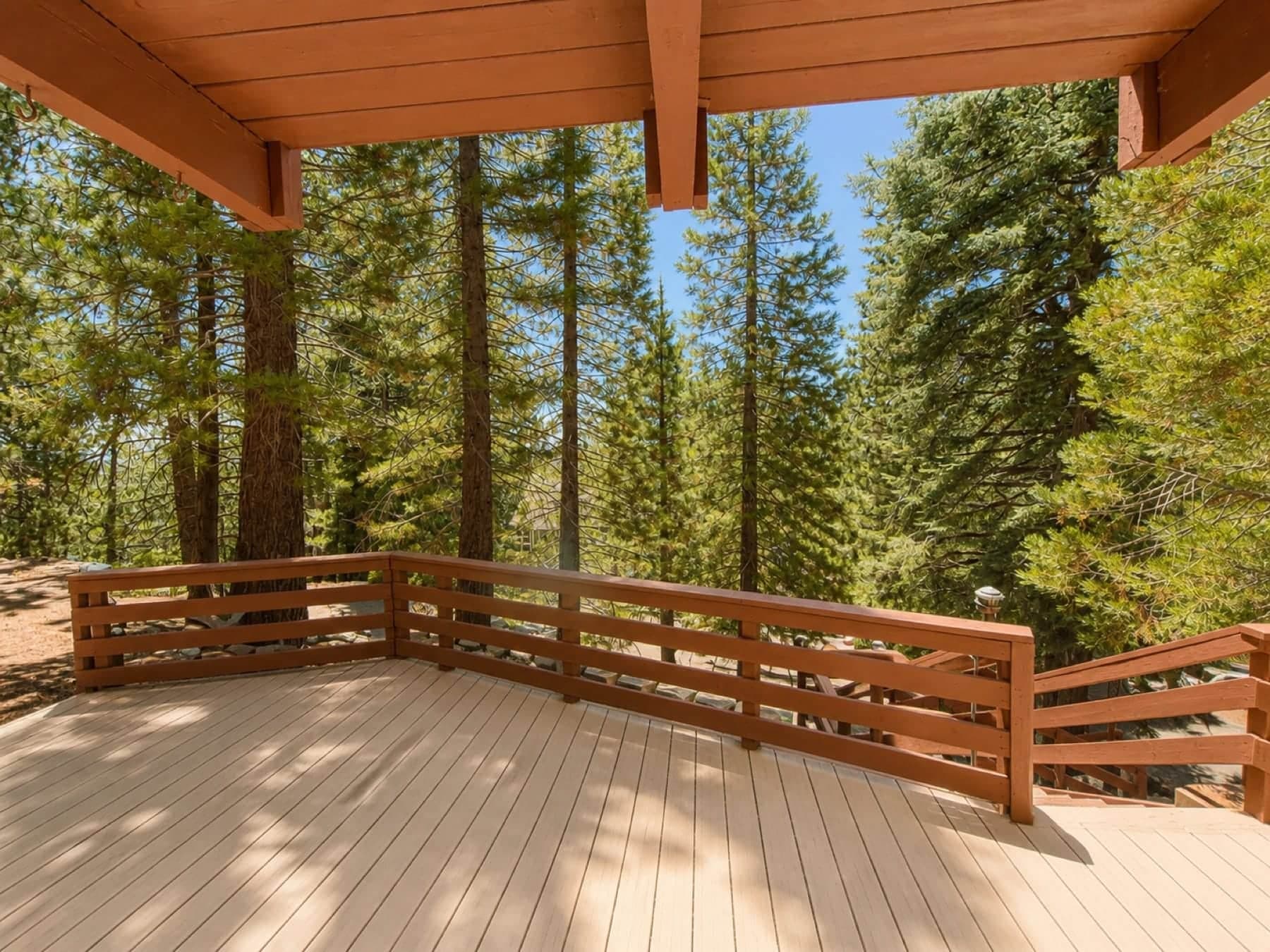
A mountain home is full of wood
Cyndi Lamperts is a REALTOR® with Mountain Top Producers Realty in Running Springs (DRE #02187485). License lookup: DRE license lookup. Decks, siding, railings, the structure, and the cabin interior can all be wood. That wood is part of the feeling people come for. It also lives in sun, rain, snow, and shade. When something looks deteriorated, or when insects have left a sign, she likes a qualified person to evaluate it with care.
A deck can be one of the sweetest rooms you own, and it meets the weather every year. From a safe place, you can notice the surface, the railings, and what you can see of the supports. Water leaving the deck, a board that looks tired, and anything that seems unusually repaired are gentle questions. The view can wait a moment while you notice what you are standing on.
Under a deck, when you can see it safely, supports, connections, wood, moisture, and drainage belong in that same look. Cyndi’s mom learned that the top boards are only part of the story. A few boards can ask for care while the structure underneath is the real conversation. Day-to-day decks stay on mountain home maintenance.
An older home’s condition, including drainage around the house, still deserves its own calm pass. The systems before the new finishes are on older mountain cabins. The first walk through a listing is on looking at a mountain property.
- 1
Enjoy the wood, then notice what looks tired
Decks, siding, railings, and what you can safely see underneath. A board, a railing, or a repair you cannot yet explain can become a question. Cyndi Lamperts, DRE #02187485: DRE license lookup. Decks: mountain home maintenance.
- 2
Let a smell or a stain stay a question
Ask what caused it and what was done. A dark spot and a musty odor belong with the right professional. The inspection page: mountain home inspections.
- 3
Invite a licensed company when the wood could matter
Weather, moisture, and insects can each mark the wood. The Structural Pest Control Board: Structural Pest Control Board. Report search: wood-destroying organism search.
- 4
Think about food, trash, and ways inside
Wildlife belongs outside. An inspector may find signs in an attic or crawl space. CDFW guidance: CDFW human-wildlife guidance. Bears and trash: living with bears and wildlife.
- 5
Leave the crawl space for the inspector
Moisture, pests, and structure are theirs to see. You can stay where the walk feels safe. The showing notes: looking at a mountain property.
A stain, a smell, and wood that feels tired
During a showing, Cyndi notices enough to know when another question belongs. Water stains, soft or damaged-looking wood, a deck that feels off, a strong musty odor, and repairs you cannot yet explain are all welcome reasons to look a little further. She would rather find the answer than guess.
A stain can have several stories, including an old problem that was already repaired. Ask what caused it, and whether anyone can describe the repair. Then let the inspector evaluate it. A smell is information too. A musty, damp, or unusual odor can sit beside the house you like, and a specialist can tell you what it means.
Cyndi’s mom treats water as a teacher. A stain, a smell, paint that has changed, or wood that no longer looks sound can be a clue. The mark and the place the water first came in can be two different spots. Finding the source lets the repair last. Moisture, shade, snow, rain, drainage, and the terrain can all shape that story. A dark spot stays a question. Mold and moisture concerns belong with the right professional, and that conversation continues on mountain home inspections.
If a project starts on the outside and then drainage asks for attention, deteriorated wood can be the next surprise. Cyndi’s mom likes to ask what caused it. Remodeling an older cabin, including that kind of surprise, is on remodeling an older mountain cabin. Hillside water and the walls that hold a slope are on retaining walls and hillside foundations.
When a termite look belongs
Damaged wood can have more than one story. Weather, moisture, and insects can each leave a mark. A piece of wood can need care for a reason other than termites, and it can still be worth understanding. A licensed company can tell you which story this piece is telling.
Many lenders ask for an inspection for wood-destroying pests and organisms before a loan. The California Structural Pest Control Board is the official home for that world. You can search whether a report was filed for an address within the last two years, and you can begin there when you want to confirm you are talking with a licensed company. Board: Structural Pest Control Board. How to search: how to search for a termite inspection. Wood-destroying organism search: wood-destroying organism search.
Cyndi can help you gather what the seller already shared and put a pest look on the list when the wood, the disclosures, or the home inspector suggest it. The opinion on the wood belongs with that licensed company. After an offer is accepted, the calendar in your contract is on the inspection period.
Rodents, and keeping the house for you
You are buying a house where wildlife already lives. The animals belong outside. An inspector may find signs of rodents or other pests in an attic, a crawl space, or another quiet spot. Food, trash, and the little ways inside are worth a gentle thought. You can love the wildlife and still want the house for your family.
Current guidance for living near wild animals stays with the California Department of Fish and Wildlife: CDFW human-wildlife guidance. Bears, food, and trash have their own page at living with bears and wildlife. What an inspector sees in the structure is a separate, kinder conversation to have with the inspector and, when they suggest it, a pest professional.
A second home that sits quiet for a stretch can use the same care. Who peeks in, how trash is handled, and what the insurance conversation asks of a vacant house can wait for the people who know this address. Cyndi will help you write the questions down.
The rooms you can walk, and the space for the inspector
A crawl space can tell a professional a great deal. Moisture, plumbing, structure, insulation, and signs of pests may all be there. You are welcome to stay in the rooms you can walk through safely. The crawl space is a kind place to leave for the inspector, especially when the opening feels tight or unsure.
Cyndi’s mom likes to remember the parts of a house guests rarely see. The pretty rooms can get the new paint. The space underneath still deserves attention. On a showing, any tight or unsure opening can wait for the person hired to look.
The general inspection comes first, and then the specialists this house actually needs. A pest look is one of those possibilities, beside roof, chimney, septic, or whatever the property itself is asking. Scope is yours to choose with your inspector. That fuller list stays on mountain home inspections.
Wood, termites, and rodents FAQ
Does soft or damaged wood mean termites?
Damaged wood can have more than one story. Weather, moisture, and insects can each leave a mark. A licensed structural pest control company can tell you what this piece of wood is showing. Structural Pest Control Board: Structural Pest Control Board. How to search for a report: how to search for a termite inspection. Cyndi Lamperts, DRE #02187485: DRE license lookup.
When is a wood-destroying pest report a kind next step?
When you see deterioration or signs of insects, when the disclosures mention wood damage, when the home inspector suggests it, or when a lender asks for that look. Many lenders ask for a wood-destroying pest and organism inspection before a loan. The board’s search covers reports filed within the last two years: wood-destroying organism search. After acceptance, the contract calendar is the inspection period.
What should I know about rodents in a mountain home?
You are buying a house where wildlife already lives, and the animals belong outside. An inspector may find signs of rodents in an attic or a crawl space. Food, trash, and entry points are worth a gentle look. You can love the wildlife and still want the house for your family. CDFW guidance: CDFW human-wildlife guidance. Bears and trash: living with bears and wildlife.
May I look in the crawl space on a showing?
You are welcome in the rooms you can walk through safely. The crawl space can hold moisture, plumbing, insulation, structure, and signs of pests, and it is a kind place to leave for the inspector. Cyndi hopes you will save any tight or unsure opening for that visit. Inspections: mountain home inspections.
Who helps me understand wood damage on a cabin?
Cyndi will help you notice what a showing can show, gather the papers that already exist, and put the right look on the list. A home inspector and a company licensed through the Structural Pest Control Board are the people who evaluate the wood. Board: Structural Pest Control Board. Older cabins: older mountain cabins. License lookup: DRE license lookup. California Department of Real Estate: California DRE.
Tell Cyndi what the wood has you wondering
A soft board, a musty room, a deck you already love, or a report someone mentioned. She will help you put the wood questions beside the rest of the house.